Cardigan Welsh Corgi
Quick Facts
| Attribute | Details |
|---|---|
| Breed Group | Herding |
| Size | Medium (25-38 lbs) |
| Height | 10.5-12.5 inches |
| Lifespan | 12-15 years |
| Temperament | Loyal, Affectionate, Smart |
| Good with Kids | Excellent |
| Good with Other Dogs | Good |
| Shedding | High (double coat) |
| Exercise Needs | Moderate (45-60 min daily) |
| Trainability | Excellent |
Recommended for Cardigan Welsh Corgis
The Farmer's Dog - Fresh food for active herding breeds | Embark DNA - Health screening for DM and other conditions | Spot Insurance - Coverage for back issues & more
Cardigan Welsh Corgi Overview
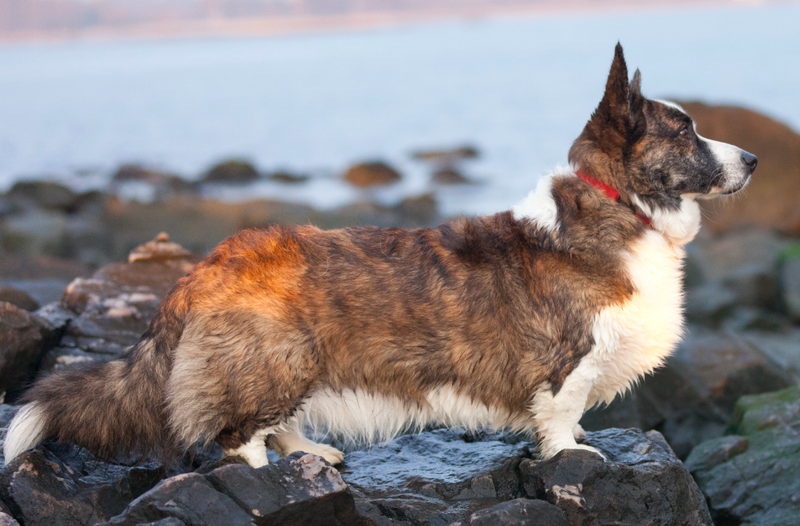
The Cardigan Welsh Corgi is one of Britain's oldest herding breeds, with a history dating back over 3,000 years in Wales. Distinguished from their Pembroke cousins by their long tail (Cardigans have tails, Pembrokes don't), they were bred to drive cattle by nipping at their heels, with their low stature helping them avoid kicks.
Often referred to as "Cardigans" or "Cardis," these intelligent, versatile dogs are known for their devotion to family and their adaptability. While less famous than the Pembroke Welsh Corgi, Cardigans are equally wonderful companions with their own distinct personality - often described as more laid-back and reserved than their tailless cousins.
The Cardigan Welsh Corgi is a breed that commands attention not just for its physical appearance but for the depth of personality and capability it brings to a household. With a lifespan averaging 12-15 years, the decision to welcome a Cardigan Welsh Corgi into your family is one that will shape your daily routine, activity levels, and emotional life for well over a decade. This breed's loyal, affectionate, smart temperament is the product of generations of selective breeding for specific traits—understanding this heritage provides valuable insight into why your Cardigan Welsh Corgi behaves the way it does and what it needs from you as an owner to truly thrive.
Exceptional Cardigan Welsh Corgi care starts with understanding, not just affection. Knowing why your Cardigan Welsh Corgi behaves the way it does — what instincts drive its daily patterns, what environments suit it best, what stressors to avoid — makes every care decision more effective. Owners who build this knowledge base early tend to encounter fewer problems and enjoy the experience more fully.
Sharing your space with a Cardigan Welsh Corgi means making room — literally and figuratively — for their specific needs. Whether that involves adjusting your daily schedule, modifying part of your home, or simply being more mindful of noise and activity levels, the accommodation is real. Owners who recognize this early and plan for it tend to have a much smoother experience than those who expect the Cardigan Welsh Corgi to simply fit into their existing routine unchanged.
Temperament & Personality
Cardigan Welsh Corgis have a loyal, affectionate personality.
- Loyal & Devoted: Form strong bonds with their families; often become "velcro dogs."
- Intelligent: Quick learners who enjoy having jobs to do and problems to solve.
- Reserved: More reserved with strangers than Pembrokes; make good watchdogs.
- Adaptable: Adjust well to various living situations and family types.
- Herding Instincts: May try to herd children or other pets; instinct can be managed.
The loyal, affectionate, smart nature of the Cardigan Welsh Corgi is not a simple personality label—it is a complex behavioral profile shaped by breed history, individual genetics, early socialization experiences, and ongoing environmental factors. What this means in practice is that two Cardigan Welsh Corgi from different lines, raised in different environments, can display meaningfully different behavioral tendencies while still sharing core breed characteristics. Understanding this distinction helps owners set realistic expectations and develop training strategies tailored to their individual dog rather than relying solely on breed generalizations.
Your veterinarian knows your Cardigan Welsh Corgi best — always verify dietary choices with them, especially if your dog has existing health conditions.
Common Health Issues
Cardigan Welsh Corgis have some breed-specific health concerns: Your veterinarian and experienced Cardigan Welsh Corgi owners can offer perspective tailored to your situation.
Spinal Issues
- Intervertebral Disc Disease (IVDD): Long spine makes them prone to disc problems.
- Degenerative Myelopathy (DM): Progressive spinal cord disease; DNA testing available.
Eye Conditions
- Progressive Retinal Atrophy (PRA): Genetic condition causing vision loss; DNA test available.
- Cataracts: Can develop in some lines.
Other Conditions
- Hip Dysplasia: Joint condition that can affect mobility.
- Obesity: Prone to weight gain; impacts spine health significantly.
- Von Willebrand's Disease: Blood clotting disorder; testing available.
Health Screening Recommendation
Before getting a Cardigan, ask breeders for hip evaluations, DM DNA testing, PRA DNA testing, and eye certifications. Consider Embark DNA testing for comprehensive health screening. Maintaining healthy weight is critical for spine health.
Good health outcomes for a Cardigan Welsh Corgi depend less on reacting to problems and more on preventing them from gaining a foothold. Regular veterinary checkups, consistent parasite control, and a stable daily routine form the backbone of effective care. Owners who maintain a simple health log — noting appetite, energy, and any unusual behaviors — often spot trends their veterinarian can act on before a condition progresses to something more serious.
DNA-based health screening has become increasingly accessible for Cardigan Welsh Corgi owners who want a clearer picture of what their individual animal may face down the road. Test results do not predict the future with certainty, but they do help prioritize which screenings matter most and whether specific dietary or activity modifications might reduce risk. Think of it as one more piece of the puzzle, not a crystal ball.
As your Cardigan Welsh Corgi moves through the middle stage of life, proactive adjustments make a measurable difference. Increasing veterinary check-up frequency, revisiting nutritional needs, and being honest about whether the current activity level still suits their body are all straightforward steps. The goal is not to slow aging itself, but to ensure that each stage is met with care that actually matches where your Cardigan Welsh Corgi is, not where they were two years ago.
Cost of Ownership
Understanding the full cost helps prepare for Cardigan ownership: Your veterinarian and experienced Cardigan Welsh Corgi owners can offer perspective tailored to your situation.
| Expense Category | Annual Cost Estimate |
|---|---|
| Food (premium quality) | $400-$700 |
| Veterinary Care (routine) | $300-$600 |
| Pet Insurance | $400-$700 |
| Grooming | $150-$350 |
| Training (first year) | $150-$500 |
| Supplies & Toys | $150-$300 |
| Total Annual Cost | $1,550-$3,150 |
Cardigan Welsh Corgis are prone to intervertebral disc disease given their long spines and short legs, making back and joint health a recurring consideration in veterinary care — and a strong argument for maintaining a healthy body weight through portion control. Their double coat sheds heavily twice a year, and many owners budget for professional deshedding sessions during those periods. Hip evaluations and progressive retinal atrophy testing are standard preventive care costs for the breed.
Budget more aggressively for the first year. Beyond the obvious — food, vet visits, supplies — there are costs that catch people off guard: replacing items your Cardigan Welsh Corgi destroys during teething, emergency visits for swallowed objects, and higher food costs during rapid growth phases. After that initial period, expenses settle into a more manageable rhythm.
Owners who maintain a regular preventive care schedule for their Cardigan Welsh Corgi consistently report lower overall vet costs than those who wait for problems to appear. This makes intuitive sense: a $300 dental cleaning now avoids a $2,000 extraction later. An annual blood panel that catches early kidney changes allows dietary management instead of emergency hospitalization. The math favors prevention every time.
Exercise & Activity Requirements
Cardigans are active dogs with moderate exercise needs: Understanding how this applies specifically to Cardigan Welsh Corgi helps you avoid common pitfalls.
- Daily Exercise: 45-60 minutes of walks and play
- Mental Stimulation: Puzzle toys and training games engage their intelligence
- Herding Activities: Herding trials provide excellent mental and physical outlets
- Low-Impact Activities: Avoid excessive jumping to protect their backs
- Dog Sports: Excel at agility, obedience, and rally
Training Tips for Cardigan Welsh Corgis
Cardigans are highly intelligent and trainable.
- Start Early: Begin training and socialization as puppies
- Positive Methods: Respond well to treats, praise, and play rewards
- Mental Challenges: Provide plenty of mental stimulation to satisfy their intelligence
- Manage Herding: Redirect herding instincts to appropriate activities
- Prevent Barking: Teach "quiet" command early; alert barkers by nature
- Consistency: Clear, consistent rules help them understand expectations
Nutrition & Feeding
Proper nutrition is critical for Cardigan health.
- Weight Management: Critical - excess weight stresses the spine; monitor carefully
- High-Quality Food: Quality protein and balanced nutrition
- Portion Control: Prone to overeating; measure meals carefully (typically 1-1.5 cups daily)
- Joint Support: Foods with glucosamine and omega-3s support joint health
- Treat Moderation: Count treats toward daily calories
Top Food Choices for Cardigans
The Farmer's Dog - Fresh, portion-controlled meals | Ollie - Custom fresh food plans | Hill's Science Diet - Weight management formulas
When it comes to Cardigan Welsh Corgi nutrition, simplicity usually wins. A well-formulated food that meets your Cardigan Welsh Corgi's specific needs is better than a rotation of trendy diets. Focus on protein quality, calorie appropriateness for your Cardigan Welsh Corgi's size and activity level, and avoiding ingredients your Cardigan Welsh Corgi does not tolerate well. The rest is marketing.
When evaluating food options for your Cardigan Welsh Corgi, resist the pull of elaborate ingredient lists. A simpler formula with higher-quality components often delivers better results than a premium-sounding blend loaded with extras your Cardigan Welsh Corgi does not need. The proof is always in the animal: steady weight, healthy coat, consistent energy, and reliable digestion.
Grooming Requirements
Cardigans have a weather-resistant double coat that sheds.
- Brushing: 2-3 times weekly; daily during heavy shedding seasons
- Shedding: Heavy shedders, especially during seasonal "coat blows"
- Bathing: Every 4-8 weeks or as needed
- Nail Trimming: Every 2-4 weeks
- Ear Cleaning: Weekly to prevent infections
- Dental Care: Regular brushing recommended
Cardigans Are Great For:
- Families wanting an intelligent, devoted companion
- Those who enjoy training and dog sports
- Apartment or house dwellers (adaptable with proper exercise)
- People wanting a watchdog in a medium-sized package
- Active owners who can provide daily exercise
Cardigans May Not Be Ideal For:
- Those who dislike heavy shedding
- Families who won't manage herding instincts around children
- People wanting a quiet dog (alert barkers)
- Those who can't maintain a healthy weight for the dog
- Homes requiring lots of stair climbing (back health)
There is no universal "right owner" for a Cardigan Welsh Corgi — people from all kinds of backgrounds and living situations make it work. What they tend to share is patience, consistency, and a genuine interest in learning about their dog's needs as those needs evolve over time. If that describes you, a Cardigan Welsh Corgi is likely to be a rewarding companion.
The Cardigan Welsh Corgi packs herding instinct, steady nerves, and a dry sense of humor into a long, low frame that seems engineered for getting underfoot in the best possible way. Unlike their Pembroke cousins, Cardigans tend to be a touch more reserved with strangers and more thoughtful in new situations, which makes the bond that forms with their primary person feel particularly solid and deliberately chosen. Owners who engage this breed with herding games, trick training, or rally obedience find an enthusiastic partner that holds up physically and mentally well beyond expectations for a dog of their size.
Related Breeds to Consider
If you're interested in Cardigan Welsh Corgis, you might also consider.
- Pembroke Welsh Corgi - Similar breed, no tail, slightly different temperament
- Swedish Vallhund - Similar build, Viking heritage
- Australian Cattle Dog - Similar herding instincts, larger size
- Shetland Sheepdog - Another intelligent herding breed
Ask Our AI About Cardigan Welsh Corgis
The habits that keep a Cardigan Welsh Corgi healthy long-term almost always start with an owner willing to learn.
Related Health & Care Guides
Once this part of Cardigan Welsh Corgi care clicks, the downstream choices tend to come faster and land better. Take the baseline below, observe for two to three weeks, and refine to whatever rhythm works for the specific Cardigan Welsh Corgi in your home.
Get Personalized AI Guidance
Ask Our AI NowDecision Guides for Cardigan Welsh Corgi
Use these only when comparing food, insurance, ownership budget, or beginner fit for this specific pet.