Bull Terrier
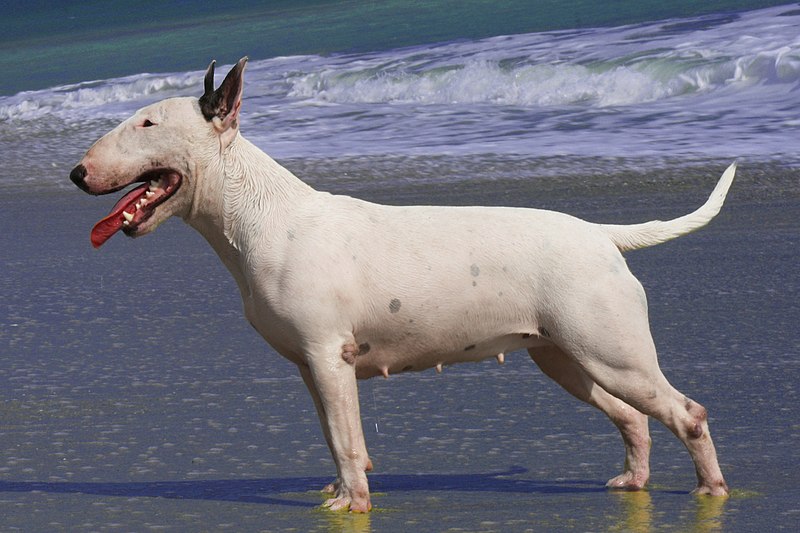
Quick Facts
| Attribute | Details |
|---|---|
| Breed Group | Terrier |
| Size | Medium (50-70 lbs) |
| Height | 21-22 inches |
| Lifespan | 12-13 years |
| Temperament | Playful, Charming, Mischievous |
| Good with Kids | Good (with supervision) |
| Good with Other Dogs | Variable (early socialization critical) |
| Shedding | Low to Moderate |
| Exercise Needs | High (1-2 hours daily) |
| Trainability | Moderate (independent thinker) |
Recommended for Bull Terriers
The Farmer's Dog - Fresh food for muscular breeds | Embark DNA - Health screening for heart and kidney conditions | Spot Insurance - Coverage for breed-specific conditions
Bull Terrier Overview
The Bull Terrier is instantly recognizable by its unique egg-shaped head and muscular build. Originally developed in 19th century England by crossing Bulldogs with various terriers, they were initially bred for dog fighting but were later refined as gentlemen's companions and show dogs.
Today, Bull Terriers are known for their clownish personalities and boundless energy. They're often described as "kids in dog suits" due to their playful, mischievous nature. Their distinctive appearance and animated expressions have made them popular in advertising and media.
The Bull Terrier is a breed that commands attention not just for its physical appearance but for the depth of personality and capability it brings to a household. With a lifespan averaging 12-13 years, the decision to welcome a Bull Terrier into your family is one that will shape your daily routine, activity levels, and emotional life for well over a decade. This breed's playful, charming, mischievous temperament is the product of generations of selective breeding for specific traits—understanding this heritage provides valuable insight into why your Bull Terrier behaves the way it does and what it needs from you as an owner to truly thrive.
What sets successful Bull Terrier owners apart is a willingness to learn about the breed on its own terms. Rather than expecting their Bull Terrier to conform to a generic ideal, they study the animal's inherent characteristics and adjust their approach accordingly. That kind of informed, respectful ownership creates a much better outcome for both the owner and the Bull Terrier.
Owning a Bull Terrier introduces a layer of structure to your day that can feel demanding at first but often becomes a welcome rhythm. Regular feeding, maintenance, and observation are not optional — they are the foundation of responsible care. Most experienced Bull Terrier owners will tell you that the routine is not the hard part; the hard part is the first few weeks of building it. After that, it feels natural.
Temperament & Personality
Bull Terriers have an unique and entertaining personality: Understanding how this applies specifically to Bull Terrier helps you avoid common pitfalls.
- Clownish & Playful: Known for their goofy antics and entertaining behavior; they love making their families laugh.
- Energetic & Active: High energy dogs that need plenty of exercise and mental stimulation.
- Loyal & Affectionate: Form strong bonds with their families and thrive on human companionship.
- Stubborn & Independent: Can be willful; training requires patience and consistency.
- Brave & Confident: Fearless nature; won't back down from challenges.
The playful, charming, mischievous nature of the Bull Terrier is not a simple personality label—it is a complex behavioral profile shaped by breed history, individual genetics, early socialization experiences, and ongoing environmental factors. What this means in practice is that two Bull Terrier from different lines, raised in different environments, can display meaningfully different behavioral tendencies while still sharing core breed characteristics. Understanding this distinction helps owners set realistic expectations and develop training strategies tailored to their individual dog rather than relying solely on breed generalizations.
What you read here is the template, not the answer, an in-person vet visit is where your Bull Terrier's plan gets personalized.
Common Health Issues
Bull Terriers are prone to several breed-specific health conditions: Your veterinarian and experienced Bull Terrier owners can offer perspective tailored to your situation.
Heart Conditions
- Mitral Valve Disease: Progressive heart condition that can lead to heart failure.
- Aortic Stenosis: Narrowing of the aortic valve; cardiac screening recommended.
Kidney Disease
- Hereditary Nephritis: Fatal kidney disease in Bull Terriers; urine protein testing recommended.
- Polycystic Kidney Disease: Cysts form in the kidneys; can be detected via ultrasound.
Other Concerns
- Deafness: White Bull Terriers have higher rates of congenital deafness; BAER testing recommended.
- Skin Allergies: Prone to allergies causing skin irritation and hot spots.
- Patellar Luxation: Kneecap displacement; more common in Miniature Bull Terriers.
- Spinning/Tail Chasing: Compulsive behavior that can be hereditary.
Health Screening Recommendation
Before getting a Bull Terrier, ask breeders for cardiac evaluations, kidney function tests (UPC ratio), and BAER hearing tests for white dogs. Consider Embark DNA testing to screen for genetic health conditions.
Cost of Ownership
Understanding the full cost helps prepare for Bull Terrier ownership.
| Expense Category | Annual Cost Estimate |
|---|---|
| Food (premium quality) | $500-$900 |
| Veterinary Care (routine) | $300-$600 |
| Pet Insurance | $500-$900 |
| Grooming | $100-$200 |
| Training (first year) | $300-$1,000 |
| Supplies & Toys (durable) | $200-$400 |
| Total Annual Cost | $1,900-$4,000 |
Exercise & Activity Requirements
Bull Terriers are high-energy dogs that need plenty of activity: Your veterinarian and experienced Bull Terrier owners can offer perspective tailored to your situation.
- Daily Exercise: 1-2 hours of vigorous activity including walks and play sessions
- Interactive Play: Love fetch, tug-of-war, and chase games
- Mental Stimulation: Puzzle toys and training games to prevent boredom
- Secure Fencing: Strong and agile; need secure enclosures
- Supervised Play: Monitor play with other dogs due to high prey drive and strength
Training Tips for Bull Terriers
Bull Terriers require patient, consistent training: Your veterinarian and experienced Bull Terrier owners can offer perspective tailored to your situation.
- Start Early: Begin training and socialization as young as possible
- Be Consistent: Set clear rules and enforce them consistently
- Keep It Fun: Short, engaging training sessions work best
- Use Positive Methods: Reward-based training; harsh methods backfire
- Extensive Socialization: Critical for good behavior with other dogs and people
- Impulse Control: Teach "leave it" and self-control exercises
Nutrition & Feeding
Proper nutrition supports the Bull Terrier's muscular build.
- High-Quality Protein: Important for maintaining muscle mass
- Portion Control: Prone to weight gain; measure meals carefully
- Limited Ingredient Diets: May help if allergies are present
- Avoid Overfeeding: Extra weight stresses joints and heart
- Fresh Water: Always available; important for kidney health
Top Food Choices for Bull Terriers
The Farmer's Dog - Fresh, portion-controlled meals | Ollie - Custom fresh food for active dogs | Hill's Science Diet - Vet-recommended formulas
Feeding a Bull Terrier well is less about following trends and more about paying attention to your specific animal. Some Bull Terriers do great on standard kibble; others need a different approach due to allergies, sensitivities, or individual metabolism. Work with your vet to find what works, and be willing to adjust as your Bull Terrier's needs change with age.
Grooming Requirements
Bull Terriers have low-maintenance grooming needs.
- Brushing: Weekly brushing with a soft bristle brush or rubber curry
- Bathing: Every 4-8 weeks or as needed
- Skin Care: Check for allergies, hot spots, or irritation
- Nail Trimming: Every 2-4 weeks
- Ear Cleaning: Weekly to prevent infections
- Dental Care: Regular brushing recommended
Bull Terriers Are Great For:
- Experienced dog owners who enjoy active, spirited companions
- Families with older children who can handle their energy
- Those who appreciate a dog with personality and humor
- Active individuals who can provide plenty of exercise
- People who enjoy training and mental challenges
Bull Terriers May Not Be Ideal For:
- First-time dog owners unfamiliar with strong-willed breeds
- Homes with small pets (high prey drive)
- Multi-dog households without proper introductions
- Those wanting an easily trainable, eager-to-please dog
- Sedentary lifestyles
A Bull Terrier is not for everyone, and that is perfectly fine. What matters is making the choice based on realistic expectations rather than idealized breed descriptions. Spend time around actual Bull Terrier dogs before committing. Visit rescues, attend meet-ups, or ask a friend who owns one if you can dog-sit for a weekend. That firsthand experience is worth more than a hundred online guides.
Related Breeds to Consider
If you're interested in Bull Terriers, you might also consider.
- Staffordshire Bull Terrier - Smaller, equally affectionate
- American Staffordshire Terrier - Similar build, loyal companion
- Boston Terrier - Smaller, easier for first-time owners
- Boxer - Similar playful personality, easier to train
Ask Our AI About Bull Terriers
Master this layer of Bull Terrier care and everything from feeding to vet visits becomes more predictable. Expect some trial and error, a Bull Terrier tends to signal clearly when something fits and when it does not.
Cardiac Health Monitoring
Owners who engage with Bull Terrier-specific guidance, rather than generic pet advice, tend to spot problems sooner.
Related Health & Care Guides
If you are optimizing a Bull Terrier's routine, this is one of the higher-leverage items to get right early.
Get Personalized AI Guidance
Ask Our AI NowDecision Guides for Bull Terrier
Use these only when comparing food, insurance, ownership budget, or beginner fit for this specific pet.