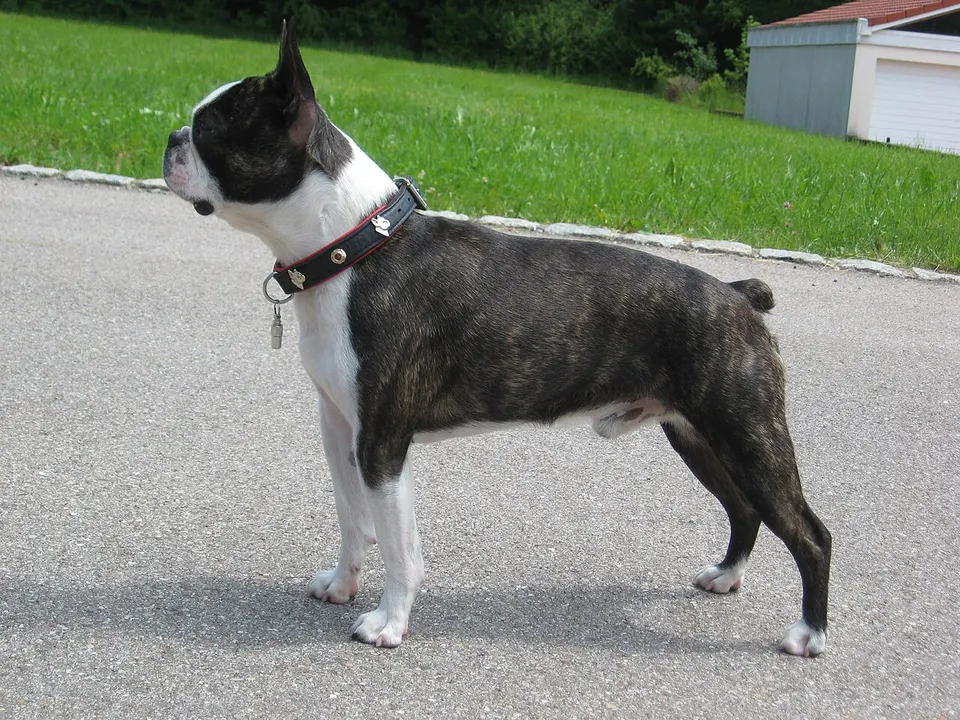
Boston Terrier: Complete Breed Guide

Boston Terrier: Complete Breed Guide - professional breed photo

Quick Facts

AttributeDetails
Breed GroupNon-Sporting
SizeSmall-Medium (12-25 lbs)
Height15-17 inches
Lifespan11-13 years
TemperamentFriendly, Bright, Amusing
Good with KidsExcellent
Good with Other DogsVery Good
SheddingLow-Moderate
Exercise NeedsModerate (30-60 min daily)
TrainabilityGood (eager to please)

Recommended for Boston Terriers

Ollie Fresh Food - Easy-to-digest meals for sensitive stomachs | Embark DNA - Health screening for genetic conditions | Spot Insurance - Coverage for eye conditions & more

Boston Terrier Overview

The Boston Terrier, often called the "American Gentleman" for its tuxedo-like markings and refined manners, is one of the few truly American breeds. Developed in Boston in the late 1800s from crosses between English Bulldogs and white English Terriers, the breed was originally used for pit fighting before evolving into the gentle companion we know today.

Boston Terriers are beloved for their expressive faces, compact size, and friendly disposition. They make excellent apartment dogs and family companions, adapting well to various living situations. Their distinctive black-and-white (or brindle-and-white) "tuxedo" coat and large, round eyes give them an unmistakable appearance.

The Boston Terrier is a breed that commands attention not just for its physical appearance but for the depth of personality and capability it brings to a household. With a lifespan averaging 11-13 years, the decision to welcome a Boston Terrier into your family is one that will shape your daily routine, activity levels, and emotional life for well over a decade. This breed's friendly, bright, amusing temperament is the product of generations of selective breeding for specific traits—understanding this heritage provides valuable insight into why your Boston Terrier behaves the way it does and what it needs from you as an owner to truly thrive.

What distinguishes an exceptional Boston Terrier owner from an adequate one is the depth of understanding they bring to the breed's specific needs. The Boston Terrier was developed with particular functions and environments in mind, and those origins continue to influence everything from their exercise requirements (moderate (30-60 min daily)) to their social behavior and trainability (good (eager to please)). Prospective owners should understand that a Boston Terrier's friendly, bright, amusing nature is not something that can be trained away or suppressed—it is a fundamental part of who the dog is. The most successful Boston Terrier households are those that channel these inherent traits productively rather than attempting to reshape the dog into something it is not.

Living with a Boston Terrier means adapting your lifestyle to accommodate a Small-Medium (12-25 lbs) dog with genuine physical and mental needs. This is not a breed that does well with minimal interaction or sporadic attention. Their compatibility with children (excellent) and their overall social orientation mean that Boston Terrier function best as integrated family members rather than backyard or kennel dogs. The emotional bond that forms between a Boston Terrier and its family is one of the breed's most compelling qualities, but it also means that these dogs are particularly vulnerable to the effects of isolation, inconsistent routines, and insufficient mental stimulation. Owners who invest in building a strong, trusting relationship with their Boston Terrier from the beginning are rewarded with a level of companionship and loyalty that is difficult to match in other breeds.

Temperament & Personality

Boston Terriers are known for their charming, people-oriented personalities:

The friendly, bright, amusing nature of the Boston Terrier is not a simple personality label—it is a complex behavioral profile shaped by breed history, individual genetics, early socialization experiences, and ongoing environmental factors. What this means in practice is that two Boston Terrier from different lines, raised in different environments, can display meaningfully different behavioral tendencies while still sharing core breed characteristics. Understanding this distinction helps owners set realistic expectations and develop training strategies tailored to their individual dog rather than relying solely on breed generalizations.

Social behavior in Boston Terrier develops through distinct life stages, and each stage presents opportunities and challenges for owners. The critical socialization window (roughly 3-16 weeks) is when exposure to varied people, animals, environments, and experiences has the greatest positive impact on long-term behavioral stability. However, socialization is not a one-time event—it is an ongoing process that requires continued positive exposure throughout the dog's life. Boston Terrier that are well-socialized as puppies but then isolated can experience social regression, while dogs with less-than-ideal early socialization can improve significantly with patient, positive exposure later in life. The key is consistency and quality of experiences rather than sheer quantity.

Managing the Boston Terrier's energy and drive within a household context requires strategic thinking rather than just exercise. While physical activity is important, mental stimulation is equally essential for this breed's behavioral balance. Boston Terrier that receive adequate physical exercise but insufficient mental engagement often develop nuisance behaviors such as excessive barking, destructive chewing, or repetitive behaviors. Effective mental stimulation for Boston Terrier includes structured training sessions, puzzle toys, scent work, novel environment exploration, and activities that engage their breed-specific instincts in appropriate ways. Many experienced Boston Terrier owners report that 15 minutes of focused mental exercise produces more behavioral satisfaction than an hour of repetitive physical activity.

Common Health Issues

Boston Terriers are predisposed to several health conditions that prospective owners should understand:

Brachycephalic Concerns

Eye Conditions

Other Concerns

Health Screening Recommendation

Before getting a Boston Terrier, ask breeders for eye certifications (CERF/OFA), patellar evaluation, BAER hearing test, and spine evaluations. Consider Embark DNA testing to screen for genetic health conditions.

A proactive approach to Boston Terrier's health management means understanding that prevention, early detection, and informed owner awareness are far more effective—and less expensive—than reactive treatment of advanced conditions. The Brachycephalic Obstructive Airway Syndrome (BOAS), Heat Sensitivity, Elongated Soft Palate conditions noted above are not certainties but predispositions, and many can be mitigated or managed effectively when identified early. This requires a partnership with your veterinarian built on regular wellness examinations, age-appropriate screening tests, and open communication about subtle changes you observe at home. Keeping a brief health journal noting your Boston Terrier's eating patterns, energy levels, bowel habits, and behavioral changes provides valuable information that can help your veterinarian identify trends before they become clinical problems.

Genetic testing has emerged as a powerful tool for Boston Terrier owners who want to understand their individual animal's health risk profile. DNA testing services can identify carrier status for numerous breed-relevant conditions, allowing you to make informed decisions about screening schedules, dietary modifications, and insurance coverage. While a genetic predisposition does not guarantee that your Boston Terrier will develop a particular condition, it does provide actionable information for targeted preventive care. For example, knowing that your Boston Terrier carries markers associated with joint conditions can guide decisions about exercise intensity, weight management, and joint supplementation from an early age—interventions that may significantly delay or reduce the severity of clinical disease.

Age-related health changes in Boston Terrier follow predictable patterns that informed owners can anticipate and prepare for. The transition from young adult to middle age (typically around the midpoint of the 11-13 years expected lifespan) often brings the first signs of conditions that will require ongoing management. This is the appropriate time to discuss enhanced screening protocols with your veterinarian, consider adjustments to diet and exercise routines, and evaluate whether your current insurance coverage adequately addresses the conditions most likely to emerge during the senior years. Boston Terrier that receive consistently excellent preventive care throughout their lives have demonstrably better health outcomes and quality of life in their senior years compared to those whose care becomes reactive only after problems are diagnosed.

Cost of Ownership

Understanding the full cost helps prepare for Boston Terrier ownership:

Expense CategoryAnnual Cost Estimate
Food (premium quality)$350-$600
Veterinary Care (routine)$300-$500
Pet Insurance$400-$800
Grooming$100-$200
Training (first year)$150-$400
Supplies & Toys$150-$300
Total Annual Cost$1,450-$2,800

Save on Boston Terrier Care

Chewy Autoship - Save up to 35% on food & supplies | Lemonade Pet - Affordable insurance from $15/month | K9 Training Institute - Professional training programs

Understanding the complete financial picture of Boston Terrier ownership goes beyond the annual cost table above. The figures represent averages, and your actual costs will vary based on your geographic location, the specific health needs of your individual Boston Terrier, and the level of care you choose to provide. Urban areas typically carry higher veterinary and grooming costs, while rural areas may have fewer specialized providers, requiring travel for certain services. Building a comprehensive budget that accounts for both predictable recurring costs and an emergency fund for unexpected expenses is one of the most responsible things you can do as a prospective Boston Terrier owner.

The first year of Boston Terrier ownership typically carries the highest costs due to one-time expenses including initial veterinary examinations, vaccination series, spay/neuter surgery (if applicable), basic training, and the purchase of essential supplies. After the first year, annual costs typically stabilize at a lower baseline, but owners should anticipate gradual increases as the animal ages. Senior Boston Terrier often require more frequent veterinary visits, specialized diets, joint supplements, and management of chronic conditions that emerge during the later portion of their 11-13 years lifespan. Planning for these escalating costs from the beginning prevents financial surprises that could compromise care quality during the years when your Boston Terrier needs it most.

The economic value of preventive care investment deserves emphasis because it is consistently the most cost-effective approach to Boston Terrier health management. Regular wellness examinations, timely vaccinations, dental care, parasite prevention, and quality nutrition cost less—often dramatically less—than treating the preventable conditions that arise when these measures are skipped. Data from veterinary insurance companies consistently shows that pet owners who invest in regular preventive care spend 30-50% less on veterinary care over their pet's lifetime compared to those who seek veterinary attention only when problems become obvious. For Boston Terrier specifically, this preventive approach also tends to produce better health outcomes and a higher quality of life throughout the 11-13 years expected lifespan.

Exercise & Activity Requirements

Boston Terriers have moderate exercise needs with important considerations:

Training Tips for Boston Terriers

Boston Terriers are eager learners with some unique characteristics:

Nutrition & Feeding

Proper nutrition supports your Boston Terrier's health:

Top Food Choices for Boston Terriers

Ollie - Custom fresh food for sensitive stomachs | The Farmer's Dog - Fresh, easily digestible meals | Hill's Science Diet - Sensitive stomach small breed formulas

Nutrition for Boston Terrier is a foundational aspect of health management that affects virtually every body system—from coat or feather quality and energy levels to immune function, digestive health, and longevity. The quality of nutrition you provide during each life stage has compounding effects over your Boston Terrier's lifetime, making dietary decisions one of the highest-impact areas where owners can directly influence long-term health outcomes. While the basics of Boston Terrier nutrition are well-established, individual variation means that the optimal diet for your specific animal may require some experimentation and adjustment based on their unique metabolism, activity level, and health status.

Reading and understanding pet food labels is a skill that directly benefits your Boston Terrier's health. The ingredients list, guaranteed analysis, and feeding guidelines on commercial foods provide important but incomplete information. Learning to evaluate protein quality (whole meat sources versus by-product meals), identify unnecessary fillers and artificial additives, and understand the difference between minimum guaranteed values and actual nutritional content empowers you to make informed food choices. For Boston Terrier specifically, attention to caloric density relative to the animal's size and activity level helps prevent both undernutrition and the obesity that is increasingly recognized as a serious health concern across all companion animal species.

Grooming Requirements

Boston Terriers have low-maintenance coats but need regular care:

Is a Boston Terrier Right for You?

Boston Terriers Are Great For:

Boston Terriers May Not Be Ideal For:

Making an informed decision about whether Boston Terrier is the right dog for your household requires honest self-assessment about your lifestyle, living situation, experience level, and long-term plans. The lists above provide a starting framework, but the reality is more nuanced than any compatibility checklist can capture. The most important factor in successful Boston Terrier ownership is not whether you match a particular profile, but whether you are genuinely prepared to adapt your lifestyle to meet this breed's specific needs consistently over their 11-13 years lifespan. Many wonderful Boston Terrier owners do not perfectly match the "ideal owner" profile—what they share is a commitment to learning and adapting.

If you are seriously considering a Boston Terrier, invest time in firsthand research before making a commitment. Visit with Boston Terrier owners if possible, attend breed-specific events or meetups, and consult with breeders or rescue organizations who can provide candid assessments of the breed's day-to-day reality. Online research is valuable but cannot fully convey what living with a Boston Terrier is actually like—the energy level, the noise, the grooming demands, the emotional bond, and the daily routine adjustments are all things best understood through direct experience or detailed conversation with current owners.

For those who do proceed with Boston Terrier ownership, the experience is overwhelmingly positive when expectations are properly calibrated and preparation is thorough. The friendly, bright, amusing personality that makes Boston Terrier special is best appreciated by owners who understand the breed's needs and are willing to provide the daily walks, training, and socialization that keeps these dogs healthy, happy, and well-adjusted. The investment of time, energy, and resources pays returns in the form of a companionship experience that is uniquely rewarding—one that Boston Terrier owners consistently describe as one of the most fulfilling aspects of their daily lives.

Related Breeds to Consider

If you're interested in Boston Terriers, you might also consider:

Ask Our AI About Boston Terriers

Have specific questions about Boston Terrier health, training, or care? Our AI assistant can provide personalized guidance.

Brachycephalic Airway Considerations

As a brachycephalic (flat-faced) breed, the Boston Terrier requires special attention to respiratory health. The shortened skull structure that gives the breed its distinctive appearance also narrows the airways, making breathing more labored — particularly during exercise, in warm weather, or under anesthesia. The Brachycephalic Obstructive Airway Syndrome (BOAS) spectrum ranges from mild snoring to life-threatening respiratory distress. Veterinary assessment using the BOAS grading scale (Grade 0-III) helps determine whether surgical intervention such as nares widening or soft palate resection may improve quality of life. Owners should monitor for exercise intolerance, cyanosis (blue-tinged gums), and sleep apnea patterns.

Related Health & Care Guides

Get Personalized AI Guidance

Have specific questions about your pet? Our AI assistant provides expert-level, personalized advice based on your pet's unique needs and situation.

Ask Our AI Now

Sources & References

This guide references the following veterinary and scientific sources:

Content is periodically reviewed against current veterinary literature. Last reviewed: February 2026. For the most current medical guidance, consult your veterinarian directly.

Important Health Notice

No online resource can replace a hands-on veterinary examination. The breed-specific health information on this page draws from published veterinary literature and recognized breed health databases, but individual animals vary significantly. Your veterinarian — who knows your pet's complete health history — is the appropriate source for diagnostic and treatment decisions. This guide is intended to help you ask informed questions and recognize potential concerns, not to diagnose or treat conditions.

This page contains affiliate links to products and services that meet our editorial standards. We earn a small commission on qualifying purchases, which helps fund free pet health education. Affiliate partnerships never influence the accuracy of our health content.