Zebra Danio
This page is educational reference material for preparing questions. A licensed veterinarian examines the animal, makes the diagnosis, and sets the treatment.
Affiliate links may earn a commission. Affiliate disclosure.
Quick Facts
| Attribute | Details |
|---|---|
| Scientific Name | Danio rerio |
| Origin | South Asia (India, Pakistan, Bangladesh) |
| Size | 2 inches (5 cm) |
| Lifespan | 3-5 years |
| Temperature Range | 64-77°F (18-25°C) |
| pH Range | 6.5-7.5 |
| Tank Size Minimum | 10 gallons |
| Care Level | Easy |
| Diet | Omnivore |
| Temperament | Peaceful, Active |
Recommended for Zebra Danios
Aquarium Co-Op - Quality foods & supplies | Seachem - Water treatment | Fluval - Aquarium equipment
Zebra Danio Overview
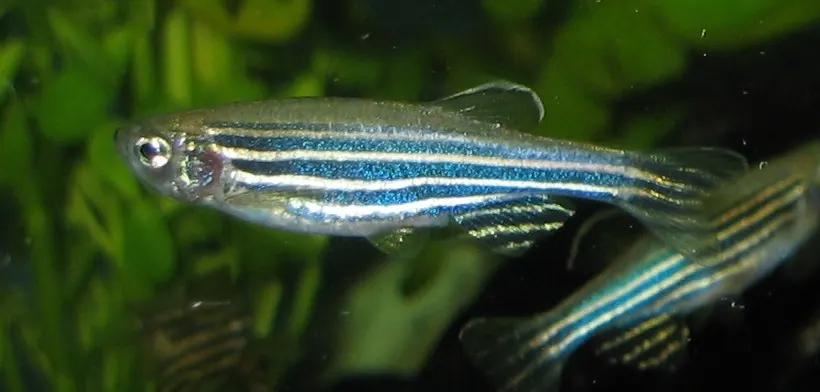
Zebra Danios are one of the hardiest and most popular aquarium fish, known for their distinctive horizontal blue stripes and incredibly active swimming behavior. These small, energetic fish have been aquarium staples for decades and are often recommended for cycling new tanks due to their exceptional tolerance for varying water conditions.
Beyond their aquarium popularity, zebra danios are important in scientific research, particularly genetics and developmental biology. They're one of the few fish that can tolerate cooler temperatures, making them suitable for unheated aquariums in moderate climates. GloFish, the genetically modified fluorescent variety, are derived from zebra danios.
Zebra danios are Danio rerio, the small striped fish from India, Pakistan, and Bangladesh that also became a laboratory animal. Adults are about 2 inches and live 3 to 5 years. Fast 2-inch fish need 10 gallons of length at the minimum. Care is rated easy, the diet omnivore, and the temperament peaceful and active. That peaceful label does not make them a gentle nano centerpiece. They are fast, they are busy from dawn until the lights go out, and they nip slow fish with long fins.
The temperature range is 64 to 77°F. They are cool-to-tropical fish, not a match for a tank held in the low 80s. A community at a steady 82°F is above this card. pH is 6.5 to 7.5 and hardness is 5 to 19 dGH. This card allows nitrate under 40 ppm, which is still a limit you have to keep. Ammonia and nitrite at 0 ppm are still required. Easy care is a school in 10 gallons or more, inside those numbers, with tankmates that can handle the speed. A betta, a fancy guppy, or an angelfish in a small tank will be harassed even though the danio is not a cichlid.
Natural Habitat & Origin
Zebra danios originate from South Asian waterways: Your aquatic veterinarian and experienced Zebra Danio owners can offer perspective tailored to your situation.
- Native Range: India, Pakistan, Bangladesh, Nepal, Myanmar
- Habitat: Streams, rivers, rice paddies, seasonal pools
- Environment: Often in areas with current and vegetation
- Climate: Subtropical - experience seasonal temperature variations
Tank Requirements & Setup
Zebra danios need space for their active swimming.
Tank Size
- Minimum: 10 gallons for a school of 6
- Recommended: 20+ gallons (long tanks preferred)
- School Size: Keep 6+ for best behavior
- Lid: Secure lid essential - they jump!
Essential Equipment
- Filter: Moderate to strong flow appreciated
- Heater: Often optional - tolerates room temperature
- Lighting: Standard aquarium lighting
- Secure Lid: Prevent jumping
Decoration & Plants
- Open Swimming: Need plenty of room to swim
- Plants: Live plants along sides and back
- Current: Appreciate water movement
- Substrate: Any type works
Water Parameters
Zebra danios are very adaptable: Your aquatic veterinarian and experienced Zebra Danio owners can offer perspective tailored to your situation.
| Parameter | Ideal Range |
|---|---|
| Temperature | 64-77°F (18-25°C) |
| pH | 6.5-7.5 |
| Ammonia | 0 ppm |
| Nitrite | 0 ppm |
| Nitrate | <40 ppm |
| Hardness (GH) | 5-19 dGH |
Temperature Flexibility
Zebra danios can tolerate a wide temperature range, making them suitable for unheated tanks in moderate climates. However, avoid rapid temperature fluctuations.
Diet & Feeding
Zebra danios are easy to feed and accept most foods.
Primary Foods
- Flake Food: High-quality tropical flakes
- Micro Pellets: Small floating pellets
- Frozen Foods: Brine shrimp, daphnia, bloodworms
- Live Foods: Brine shrimp, mosquito larvae
Feeding Guidelines
- Feed 2-3 times daily
- Small amounts they consume quickly
- They feed at all tank levels
This foundation turns subsequent decisions from guesswork into calibration, which is where better outcomes usually come from
Zebra Danio stable water parameters, appropriately measured feeding, and a consistent quarantine protocol carry most of the welfare signal; these factors drive outcomes more than brand-name products.
Behavior & Temperament
- Extremely Active: Constantly swimming, often near surface
- Schooling: Must be kept in groups of 6+
- Peaceful: Non-aggressive toward other fish
- Fast Swimmers: Among the fastest small aquarium fish
- Jumpers: Will jump from open tanks
- Hardy: Tolerant of various conditions
Keep them as a group and give them length. A 10-gallon tank is the minimum for fish that sprint, and a longer tank is kinder. They spawn readily, scattering eggs, and they are used in research because they breed on a schedule and the embryos are easy to see. None of that requires you to breed them at home. It does explain why a few danios become a crowd if you give them a breeding mop and then do nothing. Adults eat the eggs. A separate tank is how fry survive.
Small adjustments based on what you observe often yield the biggest improvements.
Feed ordinary omnivore fare: flake, small pellets, and frozen foods. They take it at the surface in a rush. That rush is why slower fish in the same tank look underfed. If you want a calm planted tank with long fins, choose a different 2-inch fish. If you want an active school that can live unheated in a room that stays inside 64 to 77°F, this is a durable choice. The 3-to-5-year lifespan is the normal horizon, not a short life caused by keeping them cool.
They jump. A lid on a 10-gallon tank is cheap compared with a danio on the floor. They also tolerate a range of conditions inside the card and get kept in worse ones, which is how the easy rating spreads. Tolerance is not a reason to combine them with delicate, slow, long-finned fish or to heat them like rams. Stock the school, respect 64 to 77°F, hold nitrate under 40 ppm, and let them be what they are: a fast research fish that does well in plain water and poorly as a quiet companion for a betta.
Compatibility with Other Fish
Time spent understanding this topic is one of the highest-leverage investments a Zebra Danio owner can make. Watch your individual Zebra Danio for feedback signals, and tune routines to the patterns you actually see.
Compatible Tank Mates
- Other danios (celestial pearl, giant)
- Corydoras catfish
- Barbs (with caution)
- Tetras
- Rasboras
- White Cloud Mountain minnows
- Goldfish (in cooler setups)
Incompatible Species
- Very slow-moving fish (may be stressed by activity)
- Long-finned fish (may be nipped)
- Aggressive cichlids
- Very timid species
Breeding Information
Zebra danios are easy to breed: Your aquatic veterinarian and experienced Zebra Danio owners can offer perspective tailored to your situation.
- Egg Scatterers: Scatter eggs over substrate/plants
- Spawning: Usually in morning, triggered by light
- Eggs: 100-400 non-adhesive eggs
- Hatching: 2-3 days
- Fry Care: Remove adults (they eat eggs); feed infusoria, then baby brine shrimp
- Breeding Setup: Marbles or mesh to protect eggs from adults
Popular Varieties
- Wild Type: Blue horizontal stripes on silver
- Leopard Danio: Spotted pattern
- Long-Fin: Extended finnage
- GloFish: Genetically modified fluorescent colors
- Albino: Lack of pigmentation
Common Health Issues
Ich
- Symptoms: White spots on body and fins
- Treatment: Raise temperature, ich medication
Mycobacteriosis
- Symptoms: Curved spine, weight loss, lethargy
- Note: Can be associated with danios, no cure
Fin Rot
- Symptoms: Deteriorating fins
- Treatment: Clean water, antibacterial medication
Zebra Danio Health Products
API Stress Coat - Reduces stress | Seachem Prime - Water conditioner | Aquarium Co-Op - Quality foods
Is This Fish Right for You?
Anyone willing to learn the Zebra Danio's natural tendencies usually build deeper trust with the animal too.
Zebra Danios Are Great For:
- Beginners to fishkeeping
- Cycling new aquariums
- Unheated/cooler tanks
- Active, lively aquarium displays
- Easy breeding projects
Zebra Danios May Not Be Ideal For:
- Very small tanks
- Peaceful setups needing calm fish
- Open-top aquariums
- Tanks with slow, timid fish
Before committing to a Zebra Danio, think less about whether this species is "easy" or "hard" and more about whether your setup matches its specific needs. A species rated as easy can still fail in the wrong environment.
Zebra danios are active schoolers and jumpers. Keep at least six, use a lid, and give them current. In a pair or a trio they nip, and long-fin tankmates pay for it. Longfin and GloFish danios are the same species, Danio rerio, with extra welfare problems if the fin or the fluorescent stock is extreme. They tolerate cooler water than many tropicals and still are not a goldfish-bowl animal. Feed them a varied diet and do not treat a fast fish as indestructible. A danio gasping at the surface with the whole school is an oxygen or water-quality emergency.
Cost of Ownership
Your actual costs for Zebra Danio care will depend on where you live, your animal's health, and the choices you make.
Related Species
- Neon Tetra - Colorful schooling fish
- Cherry Barb - Active, colorful fish
- Goldfish - Another coldwater option
- Corydoras - Great tank mate
Ask Our AI About Zebra Danios
Have specific questions about zebra danio care, breeding, or health issues? Our AI assistant can provide personalized guidance.
Get Personalized AI Guidance
Ask Our AI NowDecision Guides for Zebra Danio
Use these only when comparing food, insurance, ownership budget, or beginner fit for this specific pet.
Danio rerio scatters eggs and will eat them the same morning, which is why a breeding mop only turns into more danios if the adults are pulled out. They also jump through small lid gaps. A school of six in a long cycled tank, fed flake and frozen daphnia, is the setup that keeps the nipping pointed at each other.