Ramshorn Snail
This page is educational reference material for preparing questions. A licensed veterinarian examines the animal, makes the diagnosis, and sets the treatment.
Affiliate links may earn a commission. Affiliate disclosure.
Quick Facts
| Attribute | Details |
|---|---|
| Scientific Name | Planorbella duryi / Planorbarius corneus |
| Origin | North America / Europe |
| Size | 0.25-1.5 inches (0.6-4 cm) |
| Lifespan | 1-3 years |
| Care Level | Very Easy |
| Tank Size | 5+ gallons |
| Temperature | 60-80°F (15-27°C) |
| pH Range | 7.0-8.0 |
| Breeding | Very Easy - prolific breeders |
Recommended for Ramshorn Snails
Chewy - Snail foods & calcium | Aquarium Co-Op - Healthy snails & supplies | Flip Aquatics - Premium color varieties
Overview
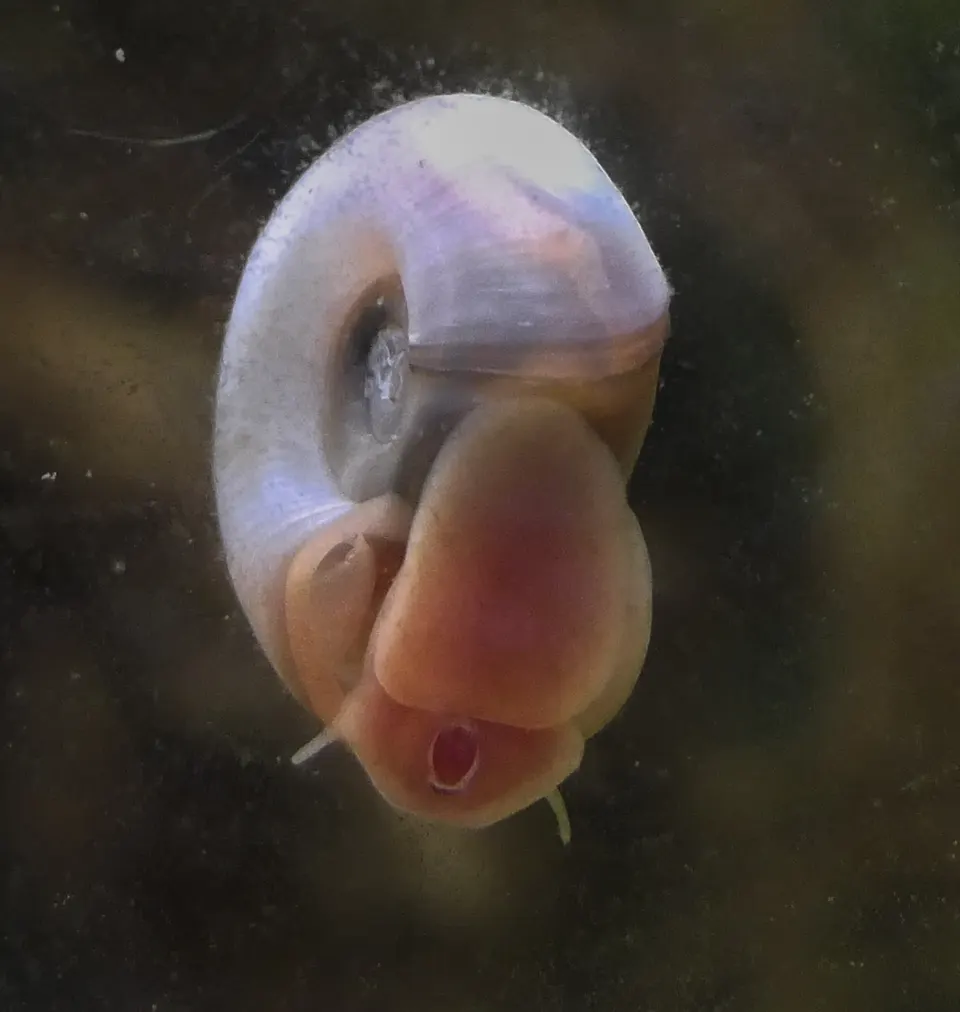
Ramshorn Snails are named for their distinctive flat, coiled shells that resemble a ram's horn. These snails are incredibly common in the aquarium hobby - sometimes appearing as unwanted hitchhikers, but increasingly kept intentionally for their beautiful colors and efficient cleanup abilities.
Through selective breeding, Ramshorn Snails now come in stunning colors including red, pink, blue, and leopard patterns. While they can reproduce rapidly, controlled populations make excellent additions to planted tanks and shrimp setups.
Ramshorn snails in aquaria are Planorbella duryi and Planorbarius corneus, small lung snails from North America and Europe. The shell runs from a quarter inch up to about 1.5 inches. They live 1 to 3 years, care is rated very easy, and a tank of 5 gallons or more is enough for the snail even though the population may disagree. They breathe air at the surface as well as using the water, so a tank with a greasy lid and no gap can stress them in a way a fully aquatic snail might not show.
Breeding is listed as very easy, and that is the whole reputation. They are prolific. A few snails become a carpet when there is leftover food. The honest control is feeding the fish less, not smashing snails every night. They eat scraps, soft algae, and decaying leaves, and they will browse tender plants if the tank is overstocked with them and underfed otherwise. A population explosion is a food audit. Nitrate on this card can sit under 40 ppm, higher than the limit for many fish here, but they still do better when it is lower. Ammonia and nitrite at 0 ppm keep the water from killing the fish that share the tank.
Temperature is 70 to 78°F. pH is 7.0 to 8.0. General hardness is 6 to 12 dGH and carbonate hardness 3 to 8 dKH. In very soft, acidic water the shell whitens and flakes. A piece of cuttlebone or a mineral source covers that without turning the tank into a limestone quarry. Pink, blue, and wild brown forms are the same kind of snail. Color is not a care category.
Natural Habitat
Ramshorn Snails inhabit diverse freshwater environments.
- Range: Native to North America and Europe; now worldwide
- Environment: Ponds, lakes, slow streams, ditches
- Conditions: Highly adaptable to various water conditions
- Diet: Decaying plant matter, algae, biofilm
Tank Requirements
Ramshorn Snails have minimal requirements.
- Tank Size: 5+ gallons; small colonies thrive in nano tanks
- Substrate: Any type works well
- Filtration: Any; intake covers protect small snails
- Plants: Generally plant-safe; may eat dying leaves
- Decor: Any surfaces for grazing
- Lid: Optional - they rarely escape
Water Parameters
Ramshorn Snails are extremely adaptable.
| Parameter | Ideal Range |
|---|---|
| Temperature | 70-78°F (21-26°C) |
| pH | 7.0-8.0 |
| GH (General Hardness) | 6-12 dGH |
| KH (Carbonate Hardness) | 3-8 dKH |
| Ammonia | 0 ppm |
| Nitrite | 0 ppm |
| Nitrate | <40 ppm (tolerant but prefer lower) |
Shell Health
While adaptable, Ramshorn Snails develop thin, pitted shells in acidic or soft water. Calcium supplementation helps maintain strong, beautiful shells in all water types.
Diet & Feeding
Ramshorn Snails eat almost anything organic.
- Detritus: Primary food - decaying plant matter and waste
- Algae: Soft algae, though not as effective as Nerites
- Dead Plants: Excellent at cleaning up dying leaves
- Fish Food: Leftover flakes, pellets, and wafers
- Vegetables: Blanched zucchini, spinach, cucumber
- Calcium: Cuttlebone, eggshells, or calcium blocks
Note: Population size often self-regulates based on available food.
Ramshorn Snail sustained welfare comes from parameter discipline, measured nutrition, and proper quarantine — not from ad-hoc intervention; these factors drive outcomes more than brand-name products.
Behavior & Temperament
Ramshorn Snails are peaceful and interesting.
- Peaceful: Cannot harm any tankmates
- Active: Move throughout the tank constantly grazing
- Air Breathing: Can breathe air; sometimes seen at surface
- Floating: May trap air in shell and float
- Reproduction: Will breed readily when conditions are good
They are useful scavengers and a poor choice if you want a planted tank with not a single extra snail. Eggs are laid in small gelatinous clusters, easy to miss on a leaf. If you need a set number of algae grazers and no babies, a nerite is the snail that does not hatch in freshwater. Ramshorns will. Quarantine plants if you do not want them, because eggs ride in on leaves more often than the adults do.
A very easy rating still excludes copper. Any treatment that puts copper in the water will kill them, along with the shrimp you forgot about. It also excludes a sealed, boiling tank at the top of a discus setup. Stay inside 70 to 78°F and the pH band, feed the fish with some restraint, and the 1-to-3-year life of each snail is uneventful. The colony, if you overfeed, will look like a problem long before any one snail is old.
Color Varieties
- Red: Bright red body and translucent shell
- Pink: Light pink coloration
- Blue: Blue-gray body coloration
- Leopard: Spotted pattern on shell
- Brown/Wild Type: Natural coloration
- Albino: White/cream colored
Compatibility
Ramshorn Snails are compatible with most peaceful species: Your aquatic veterinarian and experienced Ramshorn Snail owners can offer perspective tailored to your situation.
Good Tankmates
- Shrimp (excellent companions)
- Small peaceful fish
- Betta fish (usually safe)
- Other peaceful snails (Mystery, Nerite)
- Corydoras and small catfish
Avoid
- Loaches (snail eaters)
- Puffers (all types)
- Assassin Snails (will eat Ramshorns)
- Crayfish
- Large cichlids
Breeding
Ramshorn Snails are prolific breeders.
- Reproduction: Hermaphroditic - any two snails can breed
- Self-Fertilization: Can reproduce alone in some cases
- Eggs: Clear jelly-like clusters on hard surfaces
- Hatching: 2-4 weeks depending on temperature
- Baby Snails: Tiny but fully formed miniatures
- Growth: Fast-growing in warm, nutrient-rich tanks
Population Control
Ramshorn populations explode with abundant food. Control methods: reduce feeding, add Assassin Snails, manual removal, or use vegetable traps. Population usually stabilizes when food is limited.
Population Management
Strategies for controlling Ramshorn numbers: Breed-level advice is a starting point; the plan gets refined by observing the Ramshorn Snail that is actually in the household.
- Feeding Control: Less food = fewer snails
- Manual Removal: Remove visible snails regularly
- Vegetable Traps: Leave blanched veggies overnight; remove with snails
- Assassin Snails: Natural predators that control populations
- Fish Predators: Loaches and puffers eat snails
- Sell/Trade: Color varieties have value in the hobby
Health Issues
Common Ramshorn Snail health concerns.
- Shell Damage: Thin or pitted shells from soft/acidic water
- Parasites: Can carry parasites affecting fish
- Overpopulation Stress: Crowded conditions reduce lifespan
- Inbreeding: Can weaken color lines over generations
A few weeks of careful observation does more than any generic guide to reveal where to focus.
Small adjustments based on what you observe often yield the biggest improvements.
Ramshorn Snails Are Perfect For:
- Shrimp tank keepers
- Those wanting efficient cleaners
- Aquarists who appreciate the colors
- Live food cultivation (for puffers)
- Low-maintenance tank setups
Ramshorn Snails May Not Be Ideal For:
- Those who dislike snails multiplying
- Heavily planted tanks with delicate plants
- Perfectionists wanting controlled populations
- Tanks that can't support snail-eaters later
Fishkeeping is one of those hobbies where patience pays dividends. Rushing to add a Ramshorn Snail to a new tank, skipping the cycling process, or cutting corners on filtration leads to predictable problems.
Cost of Ownership
Keep in mind that Ramshorn Snail expenses can fluctuate based on your location, individual health needs, and the level of care you choose.
Related Species
If you're interested in Ramshorn Snails, consider these related species.
- Mystery Snail - Larger, easier population control
- Nerite Snail - Better algae control, no freshwater breeding
- Assassin Snail - Carnivorous, controls pest snails
- Rabbit Snail - Unique appearance, slow breeding
Ask Our AI About Ramshorn Snails
Have specific questions about Ramshorn Snail care, breeding, or population control? Our AI assistant can provide personalized guidance.
Get Personalized AI Guidance
Ask Our AI NowDecision Guides for Ramshorn Snail
Use these only when comparing food, insurance, ownership budget, or beginner fit for this specific pet.
Ramshorn snails explode in number when the tank is overfed. They eat leftovers, soft algae, and decaying leaves, and the shell needs calcium or it turns white and pitted. You do not have to buy more of them. Feed the fish a smaller pinch and the snail count stops climbing. Copper medications kill the whole population.