Electric Blue Crayfish
This page is educational reference material for preparing questions. A licensed veterinarian examines the animal, makes the diagnosis, and sets the treatment.
Affiliate links may earn a commission. Affiliate disclosure.
Quick Facts
| Attribute | Details |
|---|---|
| Scientific Name | Procambarus alleni |
| Origin | Florida, USA (selectively bred color) |
| Size | 4-5 inches (10-13 cm) |
| Lifespan | 5-6 years |
| Care Level | Easy |
| Tank Size | 20+ gallons |
| Temperature | 65-75°F (18-24°C) |
| pH Range | 6.5-8.0 |
| Breeding | Easy in proper conditions |
Recommended for Electric Blue Crayfish
Chewy - Crayfish foods & supplies | Aquarium Co-Op - Caves & hiding spots | Flip Aquatics - Electric blue crayfish
Overview
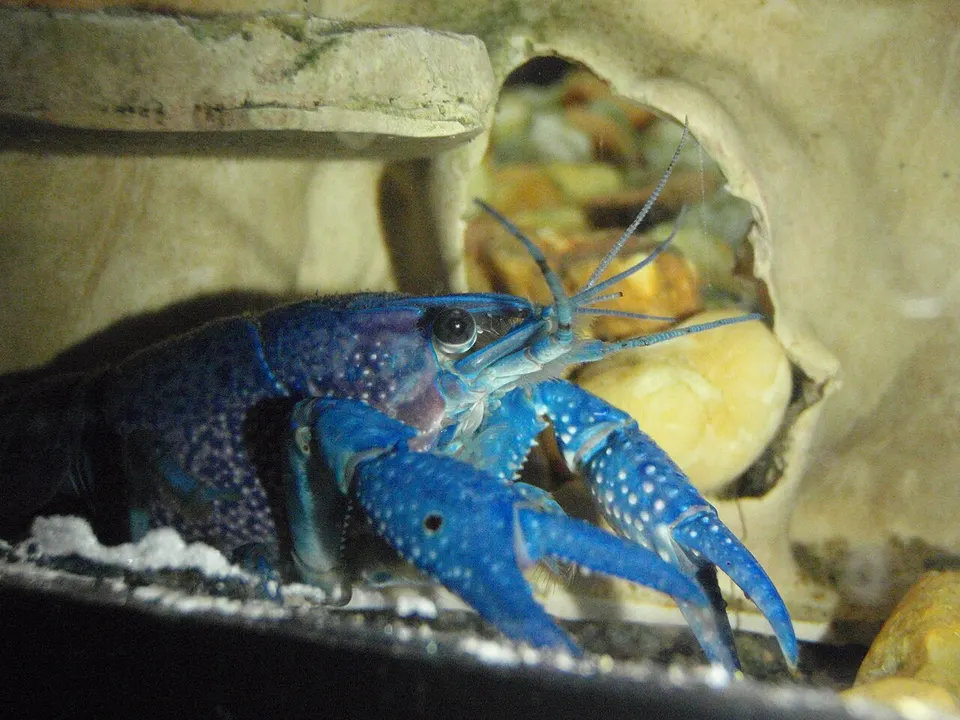
The Electric Blue Crayfish is a stunning color morph of the Florida crayfish (Procambarus alleni), selectively bred for its vibrant cobalt blue coloration. This hardy, fascinating crustacean brings bold color and entertaining behavior to freshwater aquariums.
These crayfish are relatively easy to keep but are known for their aggressive, opportunistic nature. They'll attempt to catch fish, uproot plants, and rearrange tank decorations - behaviors that make them entertaining but require careful tankmate selection and tank setup.
Electric blue crayfish are a blue form of Procambarus alleni, the Florida crayfish, with the color selected in captivity. Adults reach 4 to 5 inches and live 5 to 6 years. One adult needs 20 gallons at the floor of this card. They want cooler water than most tropical fish, 65 to 75°F, pH 6.5 to 8.0, general hardness 6 to 18 dGH, and carbonate hardness 3 to 15 dKH. Nitrate is tolerated up toward 40 ppm on this card, which is not an invitation to skip water changes. Care is listed as easy. Breeding is easy in the right setup. The animal is still a crayfish that eats fish and plants and climbs out.
Assume it will catch anything it can hold. Sleeping fish, fry, shrimp, and snails are food. A community tank with an electric blue crayfish in it is a community tank with a predator on the floor. Fast fish that stay at the surface sometimes last. The honest setup is a species tank. One crayfish in 20 gallons, with a cave and a sand bed, will use the space. Two adults may fight, especially two males, and the loser gets dismembered. The peaceful invertebrate people imagine is a different animal.
They climb, and they are strong. A lid has to be clipped down. Filter stems, cables, and a corner the hood does not quite cover are exits. They also rearrange the tank. Plants are food and obstacles. A planted aquascape will be clipped and uprooted. Java fern tied to a rock may persist. A carpet of delicate plants will not. Driftwood and PVC or a clay cave give them the cover a crayfish uses when it is soft. They molt. The empty shell is not a body. The crayfish hides, often for a day or more, and should not be dug out to check on it.
Natural Habitat
The wild form originates from Florida.
- Range: Native to Florida, USA (St. Johns River drainage)
- Environment: Slow-moving waters, marshes, ponds, ditches
- Substrate: Muddy or sandy bottoms with hiding spots
- Behavior: Burrow into substrate; nocturnal feeders
Tank Requirements
Electric Blue Crayfish need space and hiding spots.
- Tank Size: Minimum 20 gallons for single crayfish
- Substrate: Sand or fine gravel for digging
- Hiding Spots: Essential - PVC pipes, caves, driftwood, rocks
- Plants: Will destroy most plants; use hardy or fake plants
- Filtration: Good filtration needed; protect intakes
- Lid: ESSENTIAL - excellent climbers and escape artists
Escape Risk
Electric Blue Crayfish are notorious escape artists. They can climb airline tubing, heater cords, filter intakes, and any gap in the lid. Ensure complete coverage with no openings larger than the crayfish's body.
Water Parameters
Electric Blue Crayfish are adaptable to various conditions.
| Parameter | Ideal Range |
|---|---|
| Temperature | 65-75°F (18-24°C) |
| pH | 6.5-8.0 |
| GH | 6-18 dGH |
| KH | 3-15 dKH |
| Ammonia | 0 ppm |
| Nitrite | 0 ppm |
| Nitrate | <40 ppm |
Diet & Feeding
- Commercial Foods: Sinking pellets, algae wafers, shrimp pellets
- Protein: Bloodworms, earthworms, feeder shrimp, fish pieces
- Vegetables: Blanched zucchini, spinach, peas, carrots
- Calcium: Critical for molting - cuttlebone, calcium-rich foods
- Dead Fish: Will eagerly scavenge deceased tankmates
- Plants: Will eat and destroy live plants
Feeding: Feed once daily; they have large appetites. Remove uneaten food.
Proper nutrition for Electric Blue Crayfish requires understanding not just what to feed, but how feeding strategies affect health, behavior, and water quality. A disciplined approach to feeding, where your Electric Blue Crayfish receives the right amount of appropriate food at consistent intervals, is one of the most impactful things you can do for both the fish and the overall aquarium ecosystem.
Diet variety is essential for optimal Electric Blue Crayfish health because no single commercial food provides the complete nutritional profile these fish require. Observing your Electric Blue Crayfish's response to different food types also provides useful health information, as reduced interest in normally preferred foods is often an early indicator of illness.
Behavior & Temperament
Electric Blue Crayfish are active and aggressive: Your aquatic veterinarian and experienced Electric Blue Crayfish owners can offer perspective tailored to your situation.
- Aggressive: Will attack and eat anything they can catch
- Territorial: Defend their territory, especially during molting
- Nocturnal: Most active at night
- Destructive: Will uproot plants and rearrange decor
- Escape Artists: Will find any way out of tank
- Opportunistic: Hunt weak, sleeping, or slow fish
Feed them so they are not hunting out of desperation, knowing they will hunt anyway. A sinking pellet, a blanched vegetable, and a piece of fish or shrimp a couple of times a week keeps a 5-inch crayfish from living only on whatever wanders past. Overfeeding a 20-gallon tank is how the nitrate ceiling arrives early. They are messy. A filter rated for a larger aquarium is the one that keeps up. Cool water helps. A heater set to 80°F for a tropical community is outside this card and shortens the easy years.
Five to 6 years and a simple breeding life means babies are likely if a male and a female share the tank. The female carries eggs under the tail. The young will be eaten by the adults if they have no cover, and they will eat each other. A species tank with leaf litter and many hides can raise a few. A tank you were not trying to breed will still surprise you. Do not release the extras. Procambarus alleni is a Florida animal, and a blue pet crayfish does not belong in a local pond. Easy care describes a lidded 20-gallon tank kept cool and fed. It does not describe a reef, a shrimp colony, or an open-top aquascape.
Feeding behavior in Electric Blue Crayfish reveals much about their ecological role and can be leveraged by keepers to promote natural behaviors and reduce aggression. Observing when, where, and how your Electric Blue Crayfish feeds provides diagnostic information about their comfort level, health status, and social standing. Many successful Electric Blue Crayfish keepers use varied feeding strategies including target feeding, scatter feeding, and enrichment feeders to promote natural foraging behaviors and reduce competition-related stress.
Molting
Crayfish must molt to grow - a vulnerable time.
- Frequency: Young molt frequently; adults every few months
- Pre-Molt: May become less active, stop eating
- Process: Crawls out of old exoskeleton
- Vulnerability: Soft-shelled and defenseless for 24-48 hours
- Hiding: MUST have secure hiding spot during molting
- Old Shell: Leave in tank - they eat it for calcium
Molting Protection
Crayfish are extremely vulnerable during and after molting. Tankmates (including other crayfish) may kill and eat them. Multiple hiding spots are essential for survival.
Compatibility
Electric Blue Crayfish have very limited compatible tankmates.
Possible Tankmates (With Risk)
- Fast, upper-water swimming fish (Danios, White Cloud Minnows)
- Fish too large to be caught
- No bottom dwellers
Avoid - Will Be Attacked/Eaten
- All shrimp species
- Snails
- Bottom-dwelling fish (Corydoras, plecos)
- Slow-moving fish
- Long-finned fish (bettas, guppies)
- Other crayfish (will fight)
- Any fish that rests on the bottom at night
Breeding
Electric Blue Crayfish can breed readily in aquariums.
- Sexing: Males have larger claws, gonopods visible under tail
- Mating: Male deposits sperm packet; female stores it
- Eggs: Female carries 50-200+ eggs under tail
- Incubation: 3-4 weeks
- Babies: Stay attached to mother briefly, then independent
- Survival: Separate from adults to prevent cannibalism
Health Issues
Common Electric Blue Crayfish health concerns.
- Failed Molts: Often from calcium deficiency or poor water
- Shell Rot: Bacterial infection causing shell damage
- Crayfish Plague: Fungal disease (Aphanomyces astaci)
- Lost Limbs: From fights; regenerate through molts
- Stress: From harassment or inadequate hiding spots
Signs of Health
- Active exploring and feeding behavior
- Bright blue coloration
- Complete, undamaged shell
- Regular molting
- Strong appetite
For Electric Blue Crayfish, prevention is always better than treatment.
Recognizing early signs of disease in Electric Blue Crayfish requires a trained eye and consistent observation. Establishing a daily observation routine—even just a few minutes of focused attention during feeding—helps you develop a baseline understanding of what normal behavior looks like for your specific Electric Blue Crayfish, making deviations immediately apparent.
Quarantine protocols represent one of the most impactful health management practices available to Electric Blue Crayfish keepers. This single practice prevents the majority of disease outbreaks in established aquariums and is considered essential by virtually all experienced Electric Blue Crayfish keepers.
Is This Species Right for You?
Electric Blue Crayfish Are Perfect For:
- Those wanting a bold, colorful centerpiece invertebrate
- Species-only tank setups
- Keepers who appreciate predatory behavior
- Those with secure tank setups
- Aquarists interested in breeding projects
Electric Blue Crayfish May Not Be Ideal For:
- Community tank keepers
- Planted tank enthusiasts
- Those wanting peaceful invertebrates
- Shrimp or snail keepers
- Tanks with valuable or slow fish
Aquarium keeping is a hobby of specifics, and Electric Blue Crayfish is no exception.
If you can commit to the maintenance schedule and the initial investment in proper equipment, an Electric Blue Crayfish is likely to reward you with an engaging, long-term addition to your aquarium.
Cost of Ownership
Planning ahead financially is one of the most practical things you can do before getting an Electric Blue Crayfish. Electric Blue Crayfish care costs are real and ongoing.
The true cost of keeping Electric Blue Crayfish extends well beyond the initial purchase price and basic equipment. Many aspiring Electric Blue Crayfish keepers underestimate these ongoing costs, which can lead to cut corners that ultimately compromise fish health and result in even greater expenses. A realistic budget that accounts for both routine maintenance and occasional replacement of equipment provides a more accurate picture of what Electric Blue Crayfish keeping actually costs.
Heaters, filters, lights, and pumps all have finite lifespans, and their failure—particularly heater or filter failure—can have catastrophic consequences for Electric Blue Crayfish if not addressed promptly. Many experienced Electric Blue Crayfish keepers also invest in battery-operated air pumps and backup heaters as insurance against power outages, which can be lethal to tropical species within hours depending on ambient room temperature.
The cost-benefit analysis of quality versus budget equipment deserves careful consideration for Electric Blue Crayfish keepers. This is particularly true for Electric Blue Crayfish, where the animals themselves, along with any tank mates, plants, and established biological filtration, represent a significant investment of both money and time that is worth protecting with reliable equipment.
Related Species
If you're interested in Electric Blue Crayfish, consider these related species.
- Dwarf Crayfish - Much smaller, more peaceful
- Vampire Crab - Colorful, less aggressive
- Fiddler Crab - Interesting display behavior
- Red Claw Crab - Semi-terrestrial option
Ask Our AI About Electric Blue Crayfish
Have specific questions about Electric Blue Crayfish care, aggression, or breeding? Our AI assistant can provide personalized guidance.
Get Personalized AI Guidance
Electric Blue Crayfish three disciplines determine outcomes: keeping parameters stable, measuring feed portions, and quarantining new livestock thoroughly; these factors drive outcomes more than brand-name products.
Ask Our AI NowDecision Guides for Electric Blue Crayfish
Use these only when comparing food, insurance, ownership budget, or beginner fit for this specific pet.