Great Dane
Quick Facts
| Attribute | Details |
|---|---|
| Breed Group | Working |
| Size | Giant (110-175 lbs) |
| Height | 28-32 inches (can exceed 34 inches) |
| Lifespan | 7-10 years |
| Temperament | Friendly, Patient, Dependable |
| Good with Kids | Excellent (gentle giants) |
| Good with Other Dogs | Good (with socialization) |
| Shedding | Moderate |
| Exercise Needs | Moderate (1-2 hours daily) |
| Trainability | Good (eager to please) |
Recommended for Great Danes
The Farmer's Dog - Fresh food for giant breeds | Embark DNA - DCM and genetic health screening | Spot Insurance - Coverage for bloat and heart conditions
Great Dane Overview
The Great Dane, often called the "Apollo of Dogs," is one of the world's tallest dog breeds. Despite their imposing size, Great Danes are known as gentle giants, beloved for their friendly, patient temperament. The breed originated in Germany (not Denmark as the name might suggest) where they were originally bred to hunt wild boar.
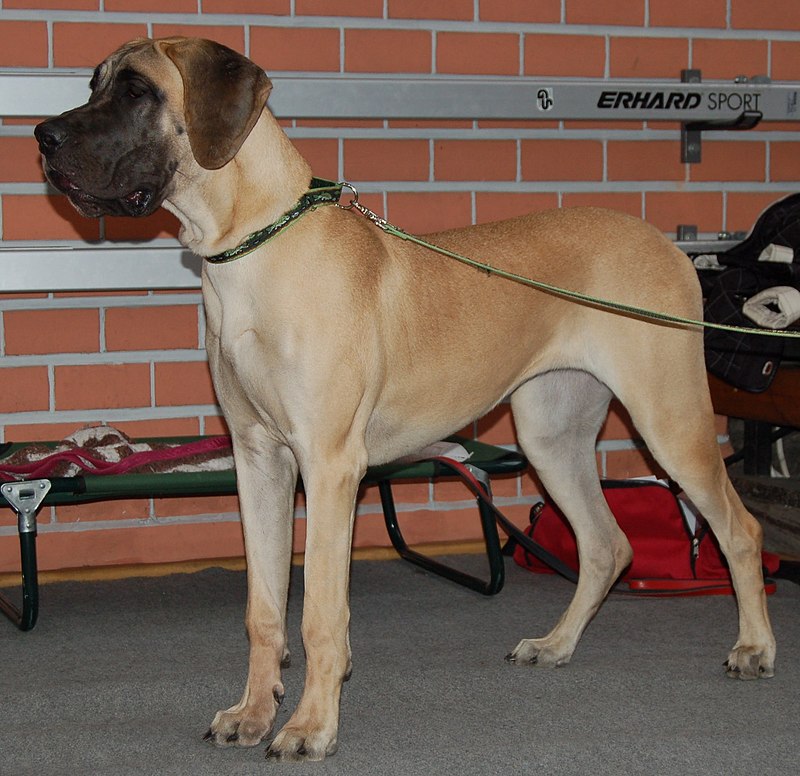
Great Danes combine elegance with power, featuring a well-muscled body, a regal carriage, and an expressive face. They come in several striking colors including fawn, brindle, blue, black, harlequin (white with black patches), and mantle. Their short, smooth coat and calm demeanor make them surprisingly well-suited for apartment living despite their size.
The first thing every Great Dane owner learns is that nothing in your home is safe from a tail at counter height. Your coffee table will be cleared by a single happy wag. Your guests will be leaned on by 150 pounds of affection. And your couch -- despite what you told yourself before getting the dog -- will eventually become shared real estate. Great Danes are not outdoor-only dogs, and they are not kennel dogs. They are house dogs that happen to weigh as much as a person, and they want to be wherever you are, preferably in physical contact.
What surprises most new Great Dane owners is how little exercise these giants actually need compared to medium-sized sporting breeds. A couple of moderate walks per day and some yard time is typically sufficient for an adult Dane. Puppies and adolescents have more energy, but exercise must be carefully managed during the rapid growth phase -- no forced running, no repetitive jumping, and no long hikes on hard surfaces until the growth plates close around 18 to 24 months. Overexercising a growing Dane risks serious orthopedic damage that can affect the dog for life.
Great Danes are remarkably gentle with children and tend to be patient even with toddlers who grab ears or climb on them. However, their sheer size creates a real safety consideration -- a playful Dane puppy weighing 80 pounds at six months can easily knock over a small child without any aggressive intent. Supervision is essential during the first couple of years, and teaching the dog a reliable "settle" and "off" command early pays dividends for the entire household. Danes also get along well with other dogs when properly socialized, though introductions with very small dogs should be managed carefully because the size difference alone poses a risk during rough play.
Temperament & Personality
Great Danes are known for their sweet, gentle nature: Your veterinarian and experienced Great Dane owners can offer perspective tailored to your situation.
- Gentle & Affectionate: Despite their intimidating size, Danes are incredibly gentle and affectionate. They're often described as "the world's biggest lap dogs."
- Patient with Children: Their calm temperament makes them excellent family dogs, though their size requires supervision around small children.
- Friendly but Protective: Danes are generally friendly with strangers but their presence alone is often enough to deter intruders.
- Sensitive: These dogs are emotionally sensitive and respond best to gentle training methods. Harsh corrections can damage their confidence.
- Moderately Energetic: They have a relatively calm energy level compared to their size, though puppies can be quite rambunctious.
Great Dane temperament is often described as "friendly, patient, dependable," and while that is accurate for most well-bred Danes, the breed does have more variation than the gentle giant stereotype suggests. Some Danes are outgoing and goofy, greeting every stranger with a full-body wiggle. Others are more reserved and watchful, hanging back to assess a situation before engaging. Neither style is wrong, but a shy or anxious Dane is much harder to manage than a shy Chihuahua, simply because you cannot pick up and carry a nervous 140-pound dog. Choosing a puppy from confident, stable parents goes a long way.
Early socialization is non-negotiable with a breed this large. A Great Dane that is fearful of strangers, other dogs, or new environments becomes a genuine liability at full adult size. Puppy kindergarten, calm trips to pet-friendly stores, and positive exposure to everything from wheelchairs to umbrellas should begin the day your puppy comes home and continue through the first year. Because Danes grow so quickly, the window for easy socialization feels shorter than with smaller breeds -- a 30-pound puppy at 10 weeks will be 70 pounds by 16 weeks, and by then, leash manners and basic obedience need to be well underway.
Danes are not high-energy dogs, but they are sensitive dogs that need companionship and routine. A Dane left alone in the yard will not entertain itself -- it will become anxious, and anxiety in a giant breed often manifests as destructive behavior that can cost thousands in damage. They do best when included in the household rhythm: lying at your feet while you work, riding along in the car (invest in a vehicle they actually fit in), and having a predictable schedule of meals, walks, and downtime. Mental enrichment through food puzzles, gentle trick training, and sniffari walks where they get to follow their nose at their own pace keeps their minds occupied without putting stress on their joints.
Common Health Issues
Great Danes face several health challenges, many related to their giant size: Your veterinarian and experienced Great Dane owners can offer perspective tailored to your situation.
Life-Threatening Conditions
- Bloat (GDV): Gastric Dilatation-Volvulus is a medical emergency where the stomach fills with gas and can twist. Great Danes have the highest risk of any breed. Prophylactic gastropexy during spay/neuter (consult AVMA guidelines on optimal timing) is recommended.
- Dilated Cardiomyopathy (DCM): A heart disease where the heart becomes enlarged and weakened. Regular cardiac screening essential. Affects up to 40% of Great Danes.
Orthopedic Issues
- Hip Dysplasia: Common in giant breeds. OFA screening recommended.
- Osteosarcoma: Bone cancer, unfortunately common in large and giant breeds.
- Wobbler Syndrome: Cervical vertebral instability affecting the spinal cord.
- Hypertrophic Osteodystrophy (HOD): Developmental bone disease in puppies.
Other Concerns
- Hypothyroidism: Common endocrine disorder in the breed.
- Entropion/Ectropion: Eyelid abnormalities that may require surgical correction.
- Happy Tail Syndrome: Their powerful tails can injure themselves when wagging against hard surfaces.
Bloat Prevention is Critical
Learn the signs of bloat: distended abdomen, unproductive retching, restlessness, and rapid decline. This is a life-threatening emergency requiring immediate veterinary care. Consider prophylactic gastropexy and use elevated feeders with slow-feed bowls. Get Embark DNA testing for DCM and other genetic conditions.
Bloat -- gastric dilatation-volvulus, or GDV -- is the health threat that every Great Dane owner must take seriously from day one. Great Danes have the highest incidence of GDV of any breed, and when the stomach fills with gas and twists on itself, the dog can go from normal to dying within hours. Learn the signs: a distended, hard abdomen, unproductive retching or gagging, excessive drooling, restlessness, and rapid decline. If you see even one of these symptoms, drive to the nearest emergency veterinary hospital immediately -- do not wait to see if it passes. Many Dane owners and veterinarians recommend a prophylactic gastropexy, a surgical procedure that tacks the stomach to the abdominal wall to prevent twisting. This can be done at the time of spay or neuter and dramatically reduces the risk of the most dangerous form of bloat.
Dilated cardiomyopathy (DCM) is the other major concern specific to Great Danes, affecting up to 40 percent of the breed. In DCM, the heart muscle weakens and enlarges, reducing its ability to pump blood effectively. Annual cardiac screening with echocardiography -- not just a stethoscope check -- should begin by age two and continue throughout life. Early detection allows your veterinarian to start medications that can slow disease progression and extend quality time by months or even years. If you are purchasing from a breeder, ask to see cardiac clearances on both parents.
The hardest reality of Great Dane ownership is the short lifespan. Most Danes live seven to ten years, and some are lost to cancer, heart disease, or bloat even sooner. This compressed timeline means that your Dane enters its senior years around age five or six -- much earlier than most other breeds. Senior bloodwork panels, twice-yearly wellness exams, and close attention to subtle changes in mobility, appetite, or energy levels become essential during this stage. Joint supplements, orthopedic bedding, and ramps for getting in and out of vehicles help manage the arthritis that is nearly universal in older giant-breed dogs. Investing in comprehensive pet insurance while your Dane is still young and healthy is one of the smartest financial decisions you can make, given the breed's predisposition to expensive medical emergencies.
Cost of Ownership
Great Danes are expensive to own due to their size and health needs: Your veterinarian and experienced Great Dane owners can offer perspective tailored to your situation.
| Expense Category | Annual Cost Estimate |
|---|---|
| Food (premium quality) | $1,200-$2,400 |
| Veterinary Care (routine) | $500-$1,000 |
| Cardiac Screening | $300-$600 |
| Pet Insurance | $600-$1,200 |
| Grooming | $150-$300 |
| Giant-Sized Supplies | $400-$800 |
| Total Annual Cost | $3,150-$6,300 |
Save on Great Dane Care
Chewy Autoship - Save up to 35% on food & supplies | Lemonade Pet - Pet insurance for giant breeds | Petplan - Comprehensive coverage including hereditary conditions
One of the more practical financial habits for Great Dane ownership is maintaining a small emergency reserve. Unplanned costs are inevitable — a damaged enclosure, an urgent vet trip, a dietary adjustment after an intolerance surfaces. Owners who budget a buffer on top of their routine expenses consistently report less financial anxiety when these situations arise.
Every feeding plan for a Great Dane should end with a brief veterinary check, especially after weight, age, or health changes.
Exercise & Activity Requirements
Great Danes need moderate exercise appropriate for their size: Your veterinarian and experienced Great Dane owners can offer perspective tailored to your situation.
- Daily Exercise: 1-2 hours of moderate activity, split into multiple sessions
- Controlled Growth: Puppies need restricted exercise to protect developing joints - short walks only until 18-24 months
- Avoid Strenuous Activity: No running, jumping, or rough play after meals (bloat risk)
- Mental Stimulation: Training sessions and puzzle toys keep their minds engaged
- Leisurely Walks: They enjoy calm walks and exploration rather than intense exercise
Training Tips for Great Danes
Early training is essential before they become 100+ pounds.
- Start Immediately: Begin training and socialization as soon as you bring your puppy home
- Leash Manners: Teach loose leash walking early - a full-grown Dane can easily pull you over
- Jumping Prevention: Train "four on the floor" before they can knock people down
- Gentle Methods: Danes are sensitive - use positive reinforcement exclusively
- Counter Surfing: Their height puts everything at nose level - train solid "leave it" commands
Nutrition & Feeding
Proper nutrition is crucial for Great Dane health and longevity: Understanding how this applies specifically to Great Dane helps you avoid common pitfalls.
- Giant Breed Puppy Food: Critical for controlled growth - adult size achieved by 18-24 months with proper nutrition
- Multiple Small Meals: Feed 2-3 meals daily to reduce bloat risk - never one large meal
- Elevated Feeders: May help reduce bloat risk, though research is mixed
- Avoid Exercise After Eating: Wait at least 1 hour after meals before activity
- Quality Ingredients: Focus on high-quality protein sources and appropriate calcium levels
Top Food Choices for Great Danes
The Farmer's Dog - Fresh, giant breed portions | Ollie - Custom fresh food for giant breeds | Eukanuba - Giant breed formulas
Grooming Requirements
Great Danes have easy-care coats but grooming a giant dog still requires effort.
- Brushing: Weekly brushing with a rubber curry brush or hound mitt
- Bathing: Every 6-8 weeks or as needed - may need large tub or professional groomer
- Drool Management: Keep towels handy - many Danes drool, especially after eating/drinking
- Nail Trimming: Every 2-3 weeks - large nails require large clippers or grinding
- Dental Care: Daily brushing recommended
- Ear Cleaning: Weekly cleaning, especially for natural (uncropped) ears
Is a Great Dane Right for You?
Follow-up reading for Great Dane households — the pages below answer the questions most owners hit within the first year.
Great Danes Are Great For:
- Families seeking a gentle, affectionate giant companion
- Those with space for a very large dog (including vehicle transport)
- People who want a calm indoor dog with a moderate activity level
- Owners who can commit to proper giant breed nutrition and care
- Those prepared for a shorter lifespan and potential significant health costs
Great Danes May Not Be Ideal For:
- Those on limited budgets (food and vet costs are substantial)
- People who want a long-lived companion (7-10 year lifespan)
- Small living spaces without room for a giant dog
- Those who travel frequently and need easy pet care arrangements
- Families unable to supervise around small children (size, not temperament, is the concern)
There is no universal "right owner" for a Great Dane — people from all kinds of backgrounds and living situations make it work. What they tend to share is patience, consistency, and a genuine interest in learning about their dog's needs as those needs evolve over time. If that describes you, a Great Dane is likely to be a rewarding companion.
The relationship you build with a Great Dane deepens over time. What starts as a learning curve becomes a genuine partnership, shaped by shared routines and mutual trust. That is what keeps Great Dane owners coming back to the breed.
Related Breeds to Consider
If you're interested in Great Danes, you might also consider.
- Irish Wolfhound - Even taller, gentle temperament
- Mastiff - Similar size, calmer temperament
- Newfoundland - Giant breed, longer coat, excellent swimmers
- Doberman Pinscher - Smaller but similar elegant appearance
Ask Our AI About Great Danes
Understanding this aspect of Great Dane care usually spares owners from the reactive cycle that less informed households fall into. Because each Great Dane is its own animal, treat any general guideline as a starting point and refine from there.
Hip and Joint Health in the Great Dane
The Orthopedic Foundation for Animals (OFA) reports a hip dysplasia prevalence of approximately 12.4% in evaluated Great Danes (giant breed, typical weight 110-175 lbs). Clinical signs typically emerge between 4-12 months of age, though radiographic changes may be visible earlier via PennHIP evaluation.
Great Danes' extreme growth rate (they can gain 100+ lbs in their first year) makes nutritional management during development critical. Overfeeding and excessive calcium supplementation during growth increases skeletal disease risk significantly.
Exercise Guidelines: Avoid running on hard surfaces before 18 months. Controlled play on grass and moderate walks build supporting muscle. Swimming is excellent for joint-friendly conditioning.
Prevention & Management: Maintaining lean body condition is the single most impactful modifiable factor for joint health. Joint supplements containing glucosamine HCl, chondroitin sulfate, and omega-3 fatty acids (EPA/DHA) have demonstrated clinical benefit when started before symptomatic onset. For giant breeds, large/giant breed-formulated puppy diets with controlled calcium-phosphorus ratios support proper skeletal development.
Cardiac Health Monitoring
The owners who sit with the Great Dane's natural tendencies usually build deeper trust with the animal too.
Related Health & Care Guides
Get Personalized AI Guidance
Ask Our AI NowDecision Guides for Great Dane
Use these only when comparing food, insurance, ownership budget, or beginner fit for this specific pet.