Korat Cat
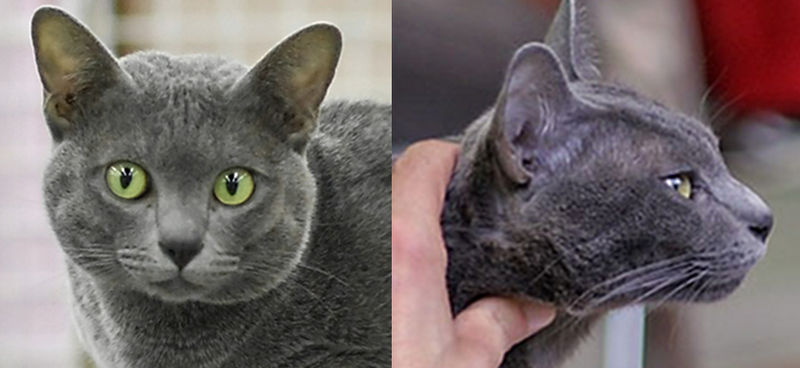
Quick Facts
| Attribute | Details |
|---|---|
| Size | Small to Medium (6-10 lbs) |
| Weight | Males: 8-10 lbs, Females: 6-8 lbs |
| Lifespan | 15-20 years |
| Temperament | Loyal, Intelligent, Gentle |
| Good with Kids | Good (gentle children) |
| Good with Other Pets | Good (prefers to be dominant) |
| Grooming Needs | Low |
| Vocalization | Moderate |
| Activity Level | Moderate to High |
Recommended for Korat Cats
Basepaws DNA Test - Genetic health screening including GM1/GM2 | Spot Insurance - Coverage for genetic conditions | Chewy - Quality cat supplies
Korat Cat Overview
The Korat (pronounced ko-RAHT) is an ancient natural breed from Thailand, where they are called "Si-Sawat" (meaning "color of the sawat seed" - a grayish-blue hue). Considered good luck cats in their homeland, Korats have been treasured for centuries and are mentioned in the ancient Thai "Cat-Book Poems" dating back to the 14th century.
Korats have a distinctive silver-blue coat with silver-tipped hairs that create a halo effect, heart-shaped faces, and large luminous green eyes. They are often confused with Russian Blues and Chartreux but are genetically distinct. Korats come in only one color - silver-tipped blue - and breed true to type.
The Korat Cat is a breed that exemplifies the remarkable diversity found within the domestic cat world. With a typical lifespan of 15-20 years, bringing a Korat Cat into your home represents a significant commitment—one that, when properly informed, leads to one of the most rewarding companion animal relationships possible. The Korat Cat's loyal, intelligent, gentle character is not simply a breed description but reflects deep-seated behavioral tendencies shaped by genetics, early socialization, and the breed's historical development. Understanding these underlying factors helps owners create environments and routines that bring out the best in their Korat Cat.
What many prospective Korat Cat owners discover quickly is that this breed has a distinctive personality that sets it apart from the generic notion of what a cat is like. The loyal, intelligent, gentle traits associated with Korat Cat manifest in daily life through specific play preferences, social interaction patterns, vocalization tendencies, and activity rhythms. Some Korat Cat are notably more interactive and demanding of attention than average, while others may display an independent streak that requires a different approach to bonding and enrichment. Understanding where your individual Korat Cat falls on this spectrum—and adjusting your care approach accordingly—is one of the keys to a harmonious human-cat relationship.
General guidance like this gives you the right vocabulary for the vet visit where the real personalization happens for your Korat.
Temperament & Personality
Korats are known for their devoted personalities.
- Intensely Loyal: Form strong bonds with their chosen people.
- Intelligent: Excellent memory; they remember people and routines.
- Gentle: Soft-natured cats that prefer calm environments.
- Observant: Always watching and aware of their surroundings.
- Sensitive: Dislike loud noises and sudden movements.
- Playful: Enjoy interactive games but aren't hyperactive.
The loyal, intelligent, gentle temperament of the Korat Cat manifests in daily life through patterns of behavior that experienced owners learn to anticipate, appreciate, and manage. Unlike dogs, cats express their personality through more nuanced channels—the slow blink that signals trust, the tail position that communicates mood, the specific vocalizations reserved for different contexts and people. With Korat Cat, these communicative behaviors are often more pronounced and distinctive than in many other breeds, which is part of what makes the breed so engaging for owners who take the time to learn their individual cat's behavioral vocabulary.
Common Health Issues
Korats have some breed-specific health concerns: Understanding how this applies specifically to Korat helps you avoid common pitfalls.
Genetic Conditions
- GM1 and GM2 Gangliosidosis: Fatal neurological diseases; DNA testing is essential and available. Responsible breeders test all breeding cats.
genetic predispositions to conditions like allergies, autoimmune disorders, and organ-specific diseases
- Low Body Fat: Korats have low body fat; may be sensitive to anesthesia.
- Respiratory Sensitivity: May be sensitive to respiratory infections.
- Generally Healthy: Otherwise, they are a robust, long-lived breed.
Critical Health Screening
ALWAYS ask breeders for GM1/GM2 gangliosidosis test results - this is essential. Kittens from tested parents are safe. Consider Basepaws DNA testing for comprehensive genetic screening.
Cost of Ownership
Understanding the full cost helps prepare for Korat ownership: Your veterinarian and experienced Korat owners can offer perspective tailored to your situation.
| Expense Category | Annual Cost Estimate |
|---|---|
| Food (premium quality) | $300-$500 |
| Veterinary Care (routine) | $150-$300 |
| Pet Insurance | $200-$400 |
| Grooming (supplies) | $30-$60 |
| Litter & Supplies | $200-$400 |
| Toys & Enrichment | $75-$150 |
| Total Annual Cost | $955-$1,810 |
Initial Costs: Korat kittens from reputable breeders typically cost $1,200-$2,500. This is a rare breed with limited availability.
Save on Korat Care
Chewy Autoship - Save up to 35% on food & supplies | Lemonade Pet - Affordable cat insurance from $12/month | Feliway - Stress reduction for sensitive cats
Most new Korat Cat owners are surprised by first-year costs. The initial setup — vet visits, vaccinations, supplies, and often training classes — can easily double the annual maintenance figure. The good news is that subsequent years are more predictable. Just keep in mind that senior Korat Cats may need additional care as they enter the last few years of their 15-20 years lifespan.
Care Requirements
Korats need a calm, stable environment: Your veterinarian and experienced Korat owners can offer perspective tailored to your situation.
- Quiet Home: They're sensitive to loud noises and chaos.
- Routine: Appreciate predictable schedules.
- Companionship: Form strong bonds and dislike being alone.
- Interactive Play: Daily play sessions to keep them engaged.
- Indoor Living: Must be kept indoors due to rarity and trusting nature.
- Slow Introductions: Take time introducing new pets or people.
Grooming Needs
Korats have minimal grooming requirements: A care plan fitted to this particular Korat almost always produces better behavior and better health markers.
- Brushing: Weekly brushing to remove loose hair.
- Coat Type: Single coat, short to medium length, lies close to body.
- Shedding: Minimal shedding year-round.
- Bathing: Rarely needed; they're excellent self-groomers.
- Nail Trimming: Every 2-3 weeks.
- Dental Care: Regular brushing recommended.
Nutrition & Feeding
Proper nutrition supports Korat health: The best Korat care plans are the ones that have been adjusted to match the animal's observed behaviour rather than the breed's published profile.
- High-Quality Protein: Animal protein should be the primary ingredient.
- Low Body Fat: May need slightly higher calorie content to maintain weight.
- Balanced Diet: No special dietary requirements.
- Portion Control: Despite lean build, monitor intake.
- Fresh Water: Multiple sources; many enjoy water fountains.
Top Food Choices for Korats
Smalls Cat Food - Human-grade fresh cat food | Hill's Science Diet - Vet-recommended nutrition | Chewy - Premium cat food selection
Feeding a Korat Cat well is less about following trends and more about paying attention to your specific animal. Some Korat Cats do great on standard kibble; others need a different approach due to allergies, sensitivities, or individual metabolism. Work with your vet to find what works, and be willing to adjust as your Korat Cat's needs change with age.
Korats Are Great For:
- Quiet households without young children
- People who want a devoted, loyal companion
- Those seeking a healthy, long-lived breed
- People who appreciate rare, ancient breeds
- Those willing to wait for a kitten (limited availability)
Korats May Not Be Ideal For:
- Noisy, chaotic households
- Families with very young, loud children
- Those who want an immediately outgoing cat with strangers
- People frequently away from home
Whether a Korat Cat fits your life comes down to a few practical questions. How much time can you realistically spend on exercise, grooming, and training each day? Is your living space suitable? Can you afford both routine care and the occasional surprise vet bill over the next 15-20 years? If the honest answers line up, a Korat Cat can be a genuinely good match. If they don't, there is no shame in choosing a different cat — or waiting until your circumstances change.
People who live with a Korat Cat tend to develop a deep appreciation for the breed's personality — the loyal, intelligent, gentle nature becomes part of the household's rhythm. That bond does not happen overnight, but it builds steadily when care is consistent and expectations are grounded.
Related Breeds to Consider
If you're interested in Korats, you might also consider.
- Russian Blue - Similar appearance, different personality
- Chartreux - Another blue cat with quiet nature
- British Shorthair Blue - Blue variety with calm demeanor
- Burmese - Similar loyalty, more social
Ask Our AI About Korat Cats
Have specific questions about Korat health, behavior, or care? Our AI assistant can provide personalized guidance.
Related Health & Care Guides
With a Korat, consistency and informed defaults matter more than perfection; repeatable, well-reasoned calls outperform occasional flawless moves. Generic recommendations are a reasonable starting point, but the Korat you live with ultimately sets the standard.
Get Personalized AI Guidance
Ask Our AI NowDecision Guides for Korat Cat
Use these only when comparing food, insurance, ownership budget, or beginner fit for this specific pet.