Green-Wing Macaw
Quick Facts
| Attribute | Details |
|---|---|
| Scientific Name | Ara chloropterus |
| Origin | South America |
| Size | 34-37 inches (86-94 cm) |
| Weight | 2.5-3.5 lbs (1100-1600 grams) |
| Lifespan | 50-60+ years |
| Noise Level | High (but calmer than most macaws) |
| Talking Ability | Good (can learn many words) |
| Diet | Pellets, nuts, fruits, vegetables |
| Care Level | Expert - Demanding |
| Space Requirements | Very Large (minimum 40"x50"x65" cage) |
Recommended for Macaws
Lafeber Premium Pellets - Veterinarian-developed nutrition | Chewy Autoship - Save on macaw supplies | Nationwide Exotic Insurance - Coverage for avian care
Green-Wing Macaw Overview
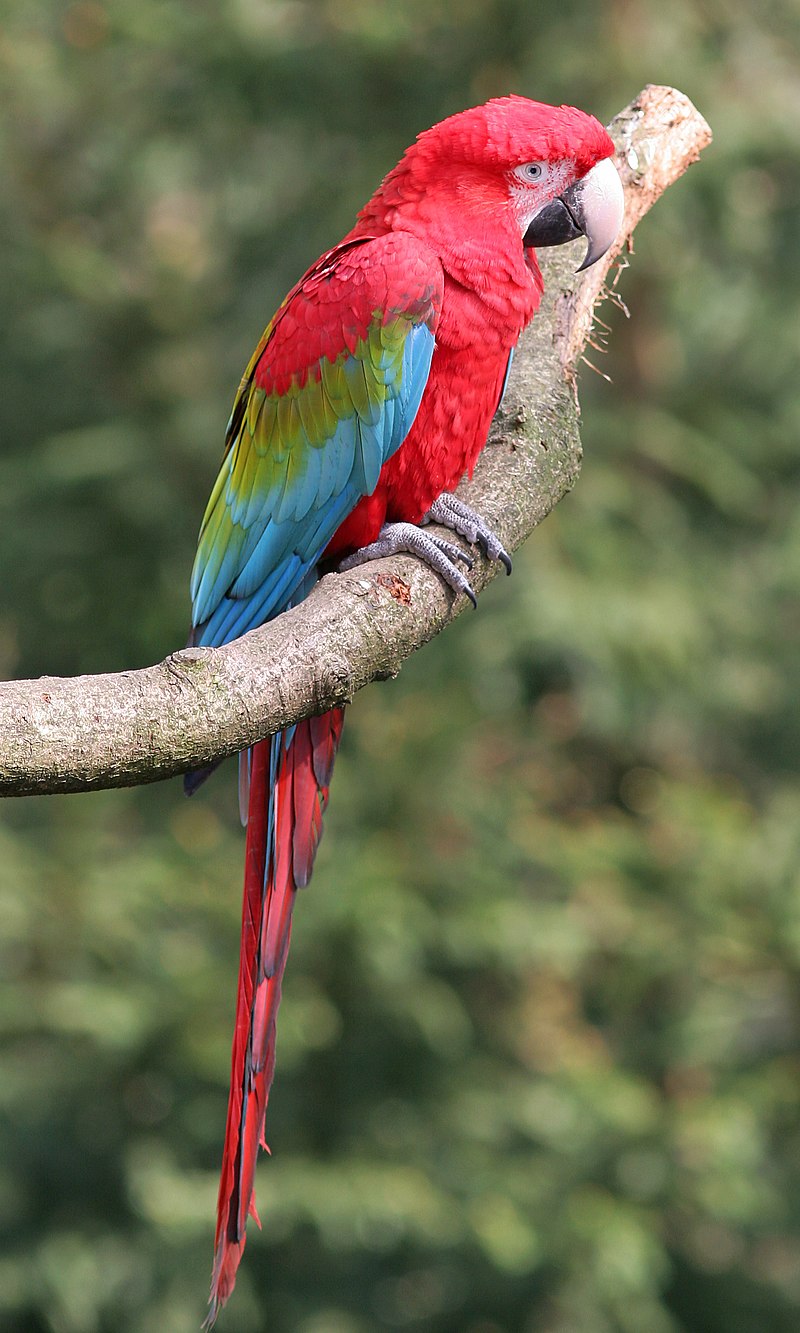
The Green-Wing Macaw, also known as the Green-Winged Macaw or Red-and-Green Macaw, is the second-largest macaw species after the Hyacinth. Often called the "gentle giant" of the macaw world, Green-Wings are prized for their relatively calm, affectionate temperament compared to other large macaws. Their stunning plumage features rich red across the head and shoulders, with green and blue wing feathers creating a magnificent display.
Green-Wings are often confused with Scarlet Macaws due to their similar coloring, but they can be distinguished by the distinctive red feather lines on their white facial patches and their larger size. Native to the forests of South America from Panama to Argentina, these magnificent birds form deep, lasting bonds with their owners.
The Green-Wing Macaw represents one of the most fascinating birds available in aviculture, combining striking physical characteristics with a behavioral complexity that rewards attentive ownership. With a potential lifespan of 50-60+ years, committing to a Green-Wing Macaw is a decision that can span a significant portion of an owner's life. This species has evolved in specific ecological niches that have shaped everything from their dietary requirements to their social structure, and understanding these evolutionary foundations is essential for providing care that goes beyond mere survival to support genuine thriving.
A conversation with your avian veterinarian ensures these general guidelines get adapted to your Green Wing Macaw's unique needs, age, and overall condition.
The physical environment you create for your Green-Wing Macaw has a direct and measurable impact on their quality of life. The cage or aviary should be sized generously—larger is almost always better, as these birds need space for wing stretching, climbing, and play. Beyond cage dimensions, environmental factors such as lighting quality (including access to full-spectrum or natural light), ambient temperature stability, air quality, and noise levels all influence your Green-Wing Macaw's physical health and emotional state. Many experienced Green-Wing Macaw owners report that investing in the highest quality cage or aviary and environmental controls they can afford pays dividends in reduced veterinary costs and improved behavioral outcomes over the bird's lifetime.
Natural Habitat
In the wild, Green-Wing Macaws inhabit: Understanding how this applies specifically to Green Wing Macaw helps you avoid common pitfalls.
- Tropical Rainforests: Dense lowland forests up to 3,000 feet elevation
- Forest Canopy: Spend most time in the upper forest levels
- Riverside Areas: Often found near rivers and streams
- Clay Licks: Gather at mineral-rich clay deposits
- Social Groups: Live in pairs or small family groups; less gregarious than other macaws
- Territory: Cover large areas foraging for seasonal fruits and nuts
Temperament & Personality
Green-Wing Macaws are beloved for their temperament: Adapt to the Green Wing Macaw sitting in your home and you will almost always outperform a by-the-book approach.
- Gentle Nature: Known as the "gentle giant" - typically calmer than other large macaws
- Affectionate: Deeply bond with their owners; love cuddling and physical contact
- Intelligent: Highly trainable with excellent problem-solving abilities
- Sensitive: Attuned to owner emotions; can become stressed in tense households
- Social: Enjoy being part of family activities and interaction
- Patient: Generally more tolerant than Scarlet Macaws
- Playful: Maintain playful personalities throughout their long lives
Housing Requirements
As the second-largest macaw, Green-Wings need substantial space.
- Minimum Cage Size: 40"W x 50"D x 65"H - largest practical indoor cage
- Ideal Setup: Bird room or large outdoor aviary is strongly recommended
- Bar Spacing: 1.5 inches with heavy-gauge stainless steel bars
- Bar Strength: Must withstand powerful beak; Green-Wings can bend weak bars
- Perches: Large natural hardwood perches (2-3 inch diameter)
- Play Areas: Multiple out-of-cage areas; consider a dedicated bird room
- Toys: Extra-large, heavy-duty destructible toys
- Space: Wingspan of 4+ feet requires room to fully extend wings
Space Consideration
Green-Wing Macaws are simply too large for standard cages. Many owners convert entire rooms or build outdoor aviaries. Consider your space carefully before acquiring one.
Diet & Nutrition
Green-Wings have hearty appetites requiring careful management: Your avian veterinarian and experienced Green Wing Macaw owners can offer perspective tailored to your situation.
- Pellets (50-60%): Large macaw formulation as the dietary foundation
- Vegetables (25%): Sweet potato, squash, carrots, leafy greens, peppers
- Fruits (10-15%): Papaya, mango, berries, melon, pomegranate
- Nuts (5-10%): Macadamia, Brazil nuts, walnuts, almonds (in shell when possible)
- Palm Fruit: Part of natural diet; excellent occasional treat
- Portion Control: Large birds prone to obesity if overfed
Foods to Avoid
- Avocado (toxic)
- Chocolate and caffeine
- Alcohol
- Fruit pits and apple seeds
- Onions, garlic
- High-fat, high-salt processed foods
Choosing the right food for your Green involves more substance than marketing. Flashy ingredient lists matter less than whether the nutritional profile matches your Green's life stage, size, and activity level. Pay attention to how your Green responds — coat condition, energy, digestion, and weight stability are the real indicators of whether a food is working.
Common Health Issues
Green-Wing Macaws may experience these health conditions.
- Proventricular Dilatation Disease (PDD): Serious viral condition affecting digestion and nerves
- Psittacine Beak and Feather Disease (PBFD): Viral disease causing feather problems
- Macaw Respiratory Hypersensitivity: Sensitivity to dust and poor air quality
- Obesity: Common in captivity due to rich diet and limited exercise
- Feather Plucking: Usually stress, boredom, or medical issue related
- Arthritis: Can develop in older birds, especially if overweight
- Vitamin A Deficiency: If not fed proper fresh foods
Training
Green-Wings are generally receptive to training.
- Early Socialization: Begin socialization and training when young
- Step-Up Training: Essential foundation command for all handling
- Positive Reinforcement: Respond excellently to treats and praise
- Trick Training: Intelligent enough for complex tricks
- Target Training: Useful for vet visits and positioning
- Gentle Approach: Respond best to patient, calm training methods
- Consistency: Maintain consistent rules and commands
Noise & Vocalization
While still loud, Green-Wings are often considered quieter macaws.
- Volume: Loud but typically less frequent screaming than Scarlet or Blue and Gold
- Dawn/Dusk Calls: Natural calling periods; expect daily vocalizations
- Talking Ability: Good mimics; can develop vocabularies of 50+ words
- Communication: More likely to talk than scream for attention
- Temperament: Generally calmer vocalizations match their gentler personality
- Housing: Still requires understanding neighbors or detached home
Compatibility
Green-Wings can integrate well into appropriate households.
- Children: Generally patient; better with older children who respect their size
- Other Pets: Supervision required; their gentle nature doesn't mean they won't defend themselves
- Other Birds: Can coexist with other large parrots with proper introduction
- Family Integration: Often bond with multiple family members more readily than other macaws
- Time Needs: 3-4+ hours daily interaction
- Sensitivity: Thrive in calm, stable households
Ideal Owners Have:
- Large home with dedicated bird space
- Experience with large parrots (preferred)
- Calm, stable household environment
- Time for extensive daily interaction
- Financial resources for their substantial needs
- Commitment for 50+ year lifespan
- Appreciation for gentle, affectionate birds
Green-Wing Macaws May Not Be Ideal For:
- First-time bird owners
- Small apartments or condos
- Very young children (due to size)
- Chaotic or frequently stressed households
- Those without substantial bird space
- People seeking a low-maintenance pet
Confidence that you can provide what a Green needs is the first prerequisite. The second is finding a quality source — a reputable aviary or a bird rescue organization that prioritizes health and proper care. These two things together give you the best possible foundation for a rewarding experience with your new Green.
The bond you develop with a Green grows through daily routines — feeding, interaction, quiet time spent in the same room. These small, repeated moments of care build trust and deepen the connection. Owners who treat this relationship as a gradual process rather than an instant bond tend to find the experience far more rewarding.
Related Species
If you're interested in Green-Wing Macaws, consider.
- Blue and Gold Macaw - Slightly smaller, similar gentle temperament
- Scarlet Macaw - Similar colors, more challenging personality
- Hyacinth Macaw - Larger, also known for gentle nature
- Military Macaw - Smaller option with good personality
Ask Our AI About Green-Wing Macaws
Have specific questions about Green-Wing Macaw care, behavior, or health? Our AI assistant can provide personalized guidance.
Get Personalized AI Guidance
Ask Our AI NowDecision Guides for Green-Wing Macaw
Use these only when comparing food, insurance, ownership budget, or beginner fit for this specific pet.