Kuhli Loach
This page is educational reference material for preparing questions. A licensed veterinarian examines the animal, makes the diagnosis, and sets the treatment.
Affiliate links may earn a commission. Affiliate disclosure.
Quick Facts
| Attribute | Details |
|---|---|
| Scientific Name | Pangio kuhlii |
| Origin | Southeast Asia (Indonesia, Malaysia) |
| Size | 3-4 inches (7.5-10 cm) |
| Lifespan | 10+ years |
| Temperature Range | 73-86°F (23-30°C) |
| pH Range | 5.5-7.0 |
| Tank Size Minimum | 20 gallons |
| Care Level | Moderate |
| Diet | Omnivore (bottom feeder) |
| Temperament | Peaceful, Shy |
Recommended for Kuhli Loaches
Aquarium Co-Op - Sinking foods & sand substrate | Seachem - Water treatment | Fluval - Quality filtration
Kuhli Loach Overview
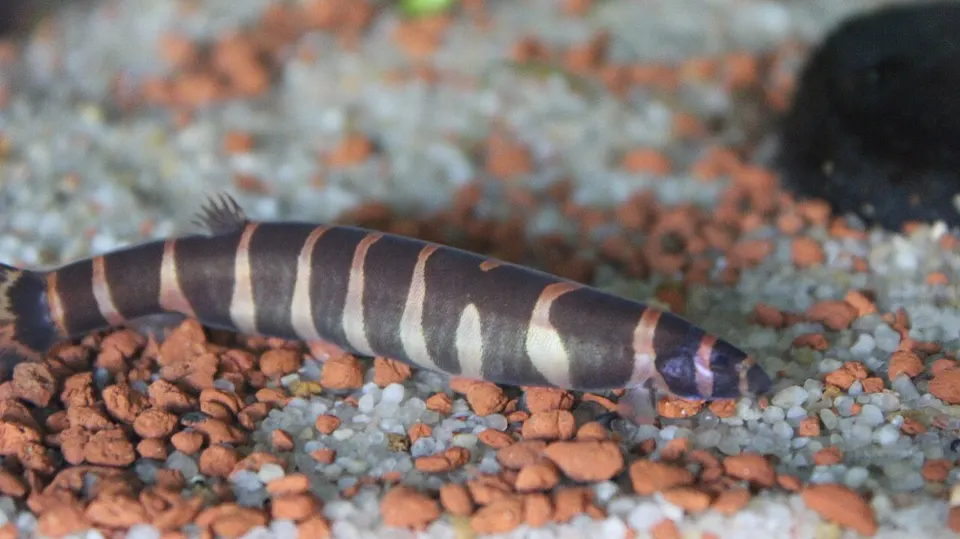
Kuhli Loaches are fascinating, eel-like bottom dwellers with distinctive yellow and brown banding. These unique fish are beloved for their interesting appearance and beneficial scavenging behavior, cleaning up leftover food from the substrate. Their snake-like movements and tendency to pile together in groups make them endlessly entertaining.
Despite their shy, nocturnal nature, kuhli loaches become bolder when kept in groups of 6 or more. They're peaceful community fish that won't bother tank mates, making them excellent additions to planted aquariums with appropriate substrate.
Pangio kuhlii is the eel-shaped loach from Indonesia and Malaysia that spends the day under the gravel and comes out when the room goes dark. Adults reach 3 to 4 inches and, unlike many small bottom fish, can live 10 years or more. The group needs 20 gallons of sand, not a smaller box of caves. A smaller box can hold a juvenile for a month and then becomes a lidless trap of hiding spots with no floor left to forage.
They are peaceful and shy, and a single kuhli is usually a fish you never see. Keep a group so that when one crosses the front glass, it is not an emergency dash between caves. Fine sand is the substrate that matches the way they burrow. Coarse gravel wedges the body and scrapes the barbels they use to find food. Leaf litter, narrow tubes, and a dimly lit corner do more for them than a pile of bright ornaments.
Kuhli Loach the three variables that move outcomes most are water stability, feeding discipline, and careful handling of new stock; these factors drive outcomes more than brand-name products.
Natural Habitat & Origin
Kuhli loaches originate from Southeast Asian waters.
- Native Range: Indonesia, Malaysia, Borneo, Sumatra, Thailand
- Habitat: Slow-moving forest streams with soft substrates
- Environment: Sandy/muddy bottoms with leaf litter and plant debris
- Behavior: Burrow in substrate, nocturnal foraging
Tank Requirements & Setup
Kuhli loaches have specific substrate requirements: Organise care decisions around the Kuhli Loach's distinctive traits rather than generic pet-care templates and the plan tends to converge on the right shape.
Tank Size
- Minimum: 20 gallons for a group
- Group Size: Keep 6+ (they're social and more active in groups)
- Footprint: Floor space matters more than height
Essential Equipment
- Filter: Gentle flow with intake cover (they can get sucked in)
- Heater: Maintain stable tropical temperatures
- Lighting: Dim preferred - they're nocturnal
- Lid: Essential - they can escape through small gaps
Substrate (Critical!)
- Required: Fine sand or very smooth gravel
- Avoid: Sharp gravel that damages their scaleless bodies
- Depth: 2-3 inches for burrowing
Decoration & Hiding Spots
- Hiding Places: Essential - PVC pipes, driftwood caves, rock caves
- Plants: Dense planting appreciated
- Leaf Litter: Mimics natural habitat
- Multiple Hideouts: More is better
Filter Intake Warning
Kuhli loaches are thin enough to get sucked into filter intakes. Always use a sponge pre-filter or intake guard to protect them.
Water Parameters
Kuhli loaches prefer soft, slightly acidic water.
| Parameter | Ideal Range |
|---|---|
| Temperature | 73-86°F (23-30°C) |
| pH | 5.5-7.0 |
| Ammonia | 0 ppm |
| Nitrite | 0 ppm |
| Nitrate | <20 ppm |
| Hardness (GH) | 0-5 dGH |
Diet & Feeding
Kuhli loaches are nocturnal scavengers: Your aquatic veterinarian and experienced Kuhli Loach owners can offer perspective tailored to your situation.
Primary Foods
- Sinking Pellets/Wafers: Bottom feeder formulas
- Frozen Foods: Bloodworms, brine shrimp (favorites)
- Live Foods: Blackworms, tubifex, daphnia
- Leftover Food: Will scavenge but need dedicated feeding
Feeding Guidelines
- Feed after lights out (nocturnal feeders)
- Ensure food reaches substrate
- Don't rely solely on leftovers from other fish
- Watch for rounded bellies to confirm eating
Water on the card is warm and soft: 73 to 86°F, pH 5.5 to 7.0, and hardness only 0 to 5 dGH. That is not the hard tap water many community tanks run. If the source water is alkaline and rocky, cut it with reverse-osmosis water rather than dropping a bottle of acid in and hoping. Both ammonia and nitrite have to sit at 0 ppm in that soft water. Nitrate in a kuhli tank should remain under 20 ppm. They breathe through the gut as well as the gills when the water is low in oxygen, so a tank with a greasy surface film and no agitation is a poor home even if the numbers look acceptable on paper.
Behavior & Temperament
- Nocturnal: Most active at night or dim lighting
- Social: Pile together in groups - keep 6+
- Shy: Hide during day, especially in small numbers
- Peaceful: Won't bother any tank mates
- Burrowers: Like to dig in soft substrate
- Scaleless: Sensitive to medications and poor water
The diet is an omnivore bottom-feeder menu. Tablets, frozen bloodworms, and the bits that reach the sand after the midwater fish have eaten will all be taken, but the loaches should not have to survive on leftovers alone. Feed after the lights go down so the food is still on the sand when they emerge. A tight lid matters because a kuhli can leave through a cable notch and dry on the floor. Care is moderate mostly because the fish is invisible until something is wrong, and a 10-year lifespan only happens if the sand stays clean enough to dig through.
Tankmates should be calm fish that are not competing for the same caves at night. Fast, nippy barbs and large cichlids that dig up the sand undo the point of the group. Do not treat a kuhli as a scavenger that replaces maintenance. It will not eat fish waste, and a 4-inch loach still adds to the bioload of that 20-gallon minimum. Watch the group at feeding time once a week so a missing fish is noticed before the sand hides it for good.
Compatibility with Other Fish
A Kuhli Loach tends to reveal the payoff of this kind of attention gradually, rather than in a single dramatic moment.
Compatible Tank Mates
- Small peaceful community fish
- Corydoras (similar care needs)
- Small tetras and rasboras
- Peaceful gouramis
- Bettas (usually compatible)
- Shrimp (usually safe)
- Snails
Incompatible Species
- Large aggressive fish
- Bottom dwellers that compete for space
- Fish that may eat them
- Very boisterous fish
Breeding Information
Kuhli loaches rarely breed in captivity.
- Difficulty: Very difficult in home aquariums
- Requirements: Large groups, soft water, specific conditions
- Spawning: Reportedly triggered by water level changes
- Eggs: Green eggs attached to plant roots
- Wild Collection: Most are wild-caught
Ich (White Spot Disease)
- Symptoms: White spots on body
- Treatment: Half-dose medications - scaleless fish are sensitive!
Skinny Disease
- Symptoms: Wasting, thin appearance
- Causes: Internal parasites, often from wild-caught fish
- Treatment: Medicated food, antiparasitic treatment
Injuries
- Causes: Sharp gravel, filter intakes, rough decorations
- Prevention: Sand substrate, intake guards, smooth decor
Kuhli Loach Health Products
Seachem Paraguard - Safe for scaleless fish | Aquarium Co-Op - Sponge pre-filters | API Test Kit - Water monitoring
The details on this page vary by household, so use the structure as orientation rather than prescription.
When the foundation is sound, nutrition and activity and everything else line up without being engineered
Is This Fish Right for You?
Kuhli Loaches Are Great For:
- Planted community tanks
- Those wanting unique bottom dwellers
- Aquarists with sandy substrates
- Peaceful community setups
Kuhli Loaches May Not Be Ideal For:
- Tanks with sharp gravel
- Those wanting always-visible fish
- Tanks without proper hiding spots
- Those keeping only 1-2 (need groups)
Adding a Kuhli Loach to your setup works best when you have honestly evaluated your tank size, maintenance habits, and budget.
Experienced Kuhli Loach keepers will tell you that the learning curve is steepest in the first few months. After that, maintenance becomes routine.
Cost of Ownership
Small adjustments based on what you observe often yield the biggest improvements.
Related Species
- Corydoras - Another peaceful bottom dweller
- Bristlenose Pleco - Bottom-dwelling catfish
- Neon Tetra - Great tank mate
- Betta Fish - Often compatible companion
Ask Our AI About Kuhli Loaches
Have specific questions about kuhli loach care, setup, or health issues? Our AI assistant can provide personalized guidance.
Get Personalized AI Guidance
Ask Our AI NowDecision Guides for Kuhli Loach
Use these only when comparing food, insurance, ownership budget, or beginner fit for this specific pet.
Kuhli loaches, Pangio, are eel-shaped schooling fish that hide in leaf litter and smooth caves. A group of six or more belongs on fine sand, because gravel traps the barbels and the body. They eat sinking pellets and frozen worms after dark. A single kuhli is the fish you never see again.