Assassin Snail
This page is educational reference material for preparing questions. A licensed veterinarian examines the animal, makes the diagnosis, and sets the treatment.
Affiliate links may earn a commission. Affiliate disclosure.
Quick Facts
| Attribute | Details |
|---|---|
| Scientific Name | Clea helena |
| Origin | Southeast Asia |
| Size | 0.75-1.25 inches (2-3 cm) |
| Lifespan | 2-3 years |
| Care Level | Easy |
| Tank Size | 10+ gallons |
| Temperature | 70-80°F (21-27°C) |
| pH Range | 7.0-8.0 |
| Breeding | Moderate (slow but steady) |
Recommended for Assassin Snails
Chewy - Protein-rich foods | Aquarium Co-Op - Healthy assassins & supplies | Petco - Live assassin snails
Overview
Assassin Snails (Clea helena) are the aquarist's secret weapon against pest snail infestations. These striking yellow and brown banded snails are carnivorous, actively hunting and consuming other snails - making them a natural, chemical-free solution for snail population control.
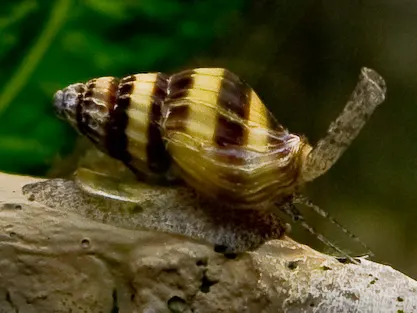
Native to Southeast Asian streams, Assassin Snails are attractive in their own right with their distinctive cone-shaped shells and bumblebee coloration. They're fascinating predators to observe as they track down, ambush, and consume their prey.
Assassin snails are Clea helena, also sold as Anentome helena, a small Southeast Asian snail that hunts other snails. Adults are about 0.75 to 1.25 inches and live 2 to 3 years. This card starts them at 10 gallons. They are not a plant-safe algae crew that happens to eat a pest on the side. The mouth is a proboscis used on meat. A tank bought an assassin to clean glass will still have dirty glass.
They want 72 to 78°F, pH 7.0 to 8.0, general hardness 8 to 15 dGH, and carbonate hardness 5 to 12 dKH. Soft, acidic water eats at the shell of any snail, and this one is no exception. Ammonia and nitrite at 0 ppm and nitrate under 20 ppm keep them active. They bury in sand. A thick gravel bed makes them harder to find and gives pest snails more places to hide from them. A sand substrate shows both the hunter and the shells.
The diet is other snails and carrion. They will take a bladder snail, a ramshorn, and a dead fish or a leftover bloodworm. They do not wipe out a huge snail explosion overnight. A tank with hundreds of small snails needs more than one or two assassins, and even then the cleanup takes weeks, not a weekend. Meanwhile the pests keep laying eggs. Remove egg masses by hand if the outbreak is already out of hand. The snails are a slow pressure, not a reset button.
Natural Habitat
Assassin Snails come from tropical freshwater environments.
- Range: Thailand, Malaysia, Indonesia
- Environment: Sandy substrates in streams and lakes
- Behavior: Burrow in sand waiting to ambush prey
- Diet: Other snails, worms, and carrion
Tank Requirements
Assassin Snails thrive in most setups.
- Tank Size: 10+ gallons; more space for hunting
- Substrate: Sand preferred for burrowing behavior
- Filtration: Standard filtration; moderate flow
- Plants: Safe with all plants
- Decor: Hiding spots and varied terrain
- Lid: Recommended though they rarely escape
Water Parameters
| Parameter | Ideal Range |
|---|---|
| Temperature | 72-78°F (22-26°C) |
| pH | 7.0-8.0 |
| GH (General Hardness) | 8-15 dGH |
| KH (Carbonate Hardness) | 5-12 dKH |
| Ammonia | 0 ppm |
| Nitrite | 0 ppm |
| Nitrate | <20 ppm |
Harder Water Preferred
Like most snails, Assassins need calcium for healthy shell development. Avoid soft, acidic water. Supplement with cuttlebone or calcium blocks if water is soft.
Diet & Feeding
Assassin Snails are carnivorous predators.
- Pest Snails: Primary food - Ramshorn, Bladder, MTS
- Other Snails: Will attack Nerites, small Mystery Snails
- Protein Foods: Bloodworms, brine shrimp, meaty pellets
- Carrion: Dead fish and shrimp
- Fish Food: Sinking pellets and wafers
- Snail Eggs: Will consume other snails' eggs
Feeding Note: When pest snails are depleted, supplement with protein-rich foods to maintain health.
What you actually gain from these details is that they replace generic defaults with breed-specific ones, which is where better outcomes originate.
Assassin Snail baseline welfare rests on three habits: stable chemistry, measured feeding, and disciplined quarantine of new arrivals; these factors drive outcomes more than brand-name products.
Behavior & Temperament
Assassin Snails display predatory behaviors: Take generic advice as the scaffolding and let the real improvements come from personalising around the actual animal.
- Burrowing: Often bury in substrate waiting to ambush
- Hunting: Follow slime trails to track prey
- Feeding: Use proboscis to consume prey from shell
- Group Feeding: Multiple assassins may swarm larger prey
- Active: More visible when hungry; burrow when full
- Nocturnal Tendency: Often more active at night
They can breed in a freshwater tank. The card calls breeding moderate, slow but steady. A keeper who adds six of them to solve a pest problem can end up with a population of assassins once the easy food is gone. They also take other ornamental snails. Nerites, mystery snails, and rabbit snails are not safe roommates. If those animals are the point of the tank, leave the assassin out.
Care level is listed as easy, and the adult animal is undemanding if the water is hard enough and some meat reaches the bottom. The mistake is the job description. They will not replace a nerite on algae, they will not save a planted tank from a snail bloom in a day, and they will eat the snails you paid for. Use them when pest snails are the target and every other snail has already been moved.
Pest Control Effectiveness
Understanding Assassin Snail capabilities.
- Target Size: Most effective on small to medium pest snails
- Speed: Slow process - won't eliminate infestations overnight
- Numbers Needed: 2-3 per 10 gallons for effective control
- Snails They Eat: Ramshorn, Bladder, Pond, MTS, small Nerites
- Snails They Avoid: Large adult Mystery Snails (too big)
- Duration: Several months for significant population reduction
Compatibility
Assassin Snails have specific compatibility considerations: Work from the Assassin Snail's distinct characteristics outward, and the downstream care decisions usually arrange themselves sensibly.
Good Tankmates
- Most community fish
- Shrimp (adults usually safe; babies at minor risk)
- Large snails they can't easily attack
- Betta fish
- Corydoras and peaceful catfish
Use Caution
- Other snails you want to keep (Mystery, Nerite)
- Baby/juvenile shrimp (occasional predation reported)
- Snail eggs you want to hatch
Avoid Keeping With
- Loaches (will eat Assassin Snails)
- Puffers (snail predators)
- Crayfish
Shrimp Safety Note
While Assassin Snails primarily target snails, they are opportunistic. Healthy adult shrimp are usually safe, but weak, molting, or baby shrimp may occasionally be targeted. Risk is generally low in well-fed tanks.
Breeding
Assassin Snails breed slowly compared to pest snails: Your aquatic veterinarian and experienced Assassin Snail owners can offer perspective tailored to your situation.
- Sexing: Separate sexes (not hermaphroditic); difficult to tell apart
- Mating: Pair up and mate for hours
- Eggs: Single eggs in small square capsules on hard surfaces
- Incubation: 8-12 weeks (very slow)
- Babies: Burrow immediately; rarely seen for months
- Population: Self-limiting; won't overpopulate like pest snails
Health Issues
Common Assassin Snail health concerns: Your aquatic veterinarian and experienced Assassin Snail owners can offer perspective tailored to your situation.
- Shell Damage: From soft/acidic water
- Starvation: After eliminating pest snails if not supplemented
- Inactivity: Normal when full; prolonged hiding may indicate issues
- Parasites: Can carry parasites but generally hardy
Keeping an Assassin Snail healthy means prioritizing water quality above everything else.
Early consistency is what converts the routine from effortful to automatic.
What Happens After Pest Snails Are Gone?
Options for Assassin Snails post-pest-control: Your aquatic veterinarian and experienced Assassin Snail owners can offer perspective tailored to your situation.
- Keep Feeding: Supplement with protein foods; they make great pets
- Rehome: Sell or trade to other aquarists
- Maintain Population: They'll naturally reduce numbers without prey
- New Tank: Move to another tank with pest problems
Is This Species Right for You?
Experienced Assassin Snail owners often cite this as the factor they wish they had taken more seriously at the start.
Assassin Snails Are Perfect For:
- Aquarists battling pest snail infestations
- Those wanting natural pest control
- Keepers who appreciate unique predatory behavior
- Tanks without desired snail populations
- Community tanks with stable fish populations
Assassin Snails May Not Be Ideal For:
- Tanks with prized snail collections
- Heavily planted shrimp breeding tanks
- Those wanting instant pest control
- Tanks with snail-eating fish
The best way to decide if an Assassin Snail is right for your tank is to talk to people who already keep them. That kind of practical insight is more valuable than any care sheet.
A well-maintained Assassin Snail is one of the more satisfying species to keep, and most owners who take the time to get it right have no regrets.
Cost of Ownership
Use accepted veterinary guidelines as the base layer and iterate when your observations push you to.
Related Species
If you're interested in Assassin Snails, consider these related species.
- Nerite Snail - Won't breed in freshwater
- Mystery Snail - Large, controlled breeding
- Ramshorn Snail - Colorful, common target for Assassins
- Rabbit Snail - Too large for Assassin predation
Ask Our AI About Assassin Snails
Have specific questions about Assassin Snail care, pest control, or compatibility? Our AI assistant can provide personalized guidance.
Get Personalized AI Guidance
Ask Our AI NowDecision Guides for Assassin Snail
Use these only when comparing food, insurance, ownership budget, or beginner fit for this specific pet.
An assassin snail, Clea helena, is a freshwater predator that eats other snails by holding them and feeding through the shell opening. After the pest snails are gone it still needs a pellet or a piece of protein. Copper medications used for parasites will kill it along with the snails.