Somali Cat
Quick Facts
| Attribute | Details |
|---|---|
| Size | Medium (6-10 lbs) |
| Lifespan | 12-16 years |
| Temperament | Playful, Curious, Athletic |
| Shedding | Moderate (seasonal) |
| Activity Level | Very High |
| Vocalization | Low to Moderate |
| Good with Kids | Excellent |
| Good with Other Pets | Good |
| Grooming Needs | Moderate |
| Intelligence | Very High |
Recommended for Somalis
Basepaws DNA Test - Genetic health screening for cats | Spot Insurance - Coverage for genetic conditions | Chewy - Premium cat supplies
Somali Cat Overview
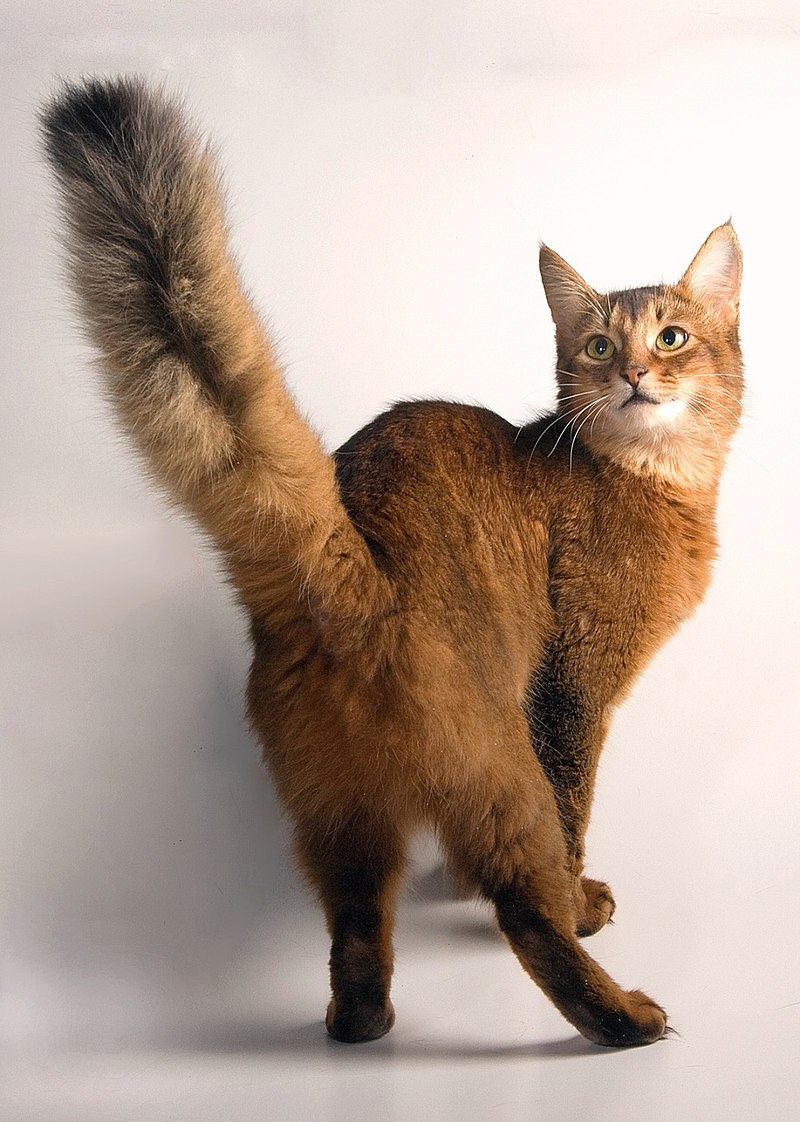
The Somali is essentially the longhaired version of the Abyssinian, often called the "Fox Cat" due to its bushy tail and wild, fox-like appearance. These stunning cats carry the recessive longhair gene that occasionally appeared in Abyssinian litters and was eventually developed into its own breed in the 1960s.
With their gorgeous ticked coats that can come in ruddy, red, blue, and fawn colors, Somalis look like wild cats straight from nature. Their full ruffs, bushy tails, and alert expressions give them an exotic appearance, while their playful personalities make them entertaining companions.
The Somali Cat is a breed that exemplifies the remarkable diversity found within the domestic cat world. With a typical lifespan of 12-16 years, bringing a Somali Cat into your home represents a significant commitment—one that, when properly informed, leads to one of the most rewarding companion animal relationships possible. The Somali Cat's playful, curious, athletic character is not simply a breed description but reflects deep-seated behavioral tendencies shaped by genetics, early socialization, and the breed's historical development. Understanding these underlying factors helps owners create environments and routines that bring out the best in their Somali Cat.
What many prospective Somali Cat owners discover quickly is that this breed has a distinctive personality that sets it apart from the generic notion of what a cat is like. The playful, curious, athletic traits associated with Somali Cat manifest in daily life through specific play preferences, social interaction patterns, vocalization tendencies, and activity rhythms. Some Somali Cat are notably more interactive and demanding of attention than average, while others may display an independent streak that requires a different approach to bonding and enrichment. Understanding where your individual Somali Cat falls on this spectrum—and adjusting your care approach accordingly—is one of the keys to a harmonious human-cat relationship.
General guidance like this gives you the right vocabulary for the vet visit where the real personalization happens for your Somali.
Personality & Temperament
Somalis are perpetual motion machines with charming personalities: Understanding how this applies specifically to Somali helps you avoid common pitfalls.
- Endlessly Active: They are athletes who love to run, jump, and climb throughout the day.
- Curious Investigators: Nothing escapes their attention; they need to inspect everything.
- Mischievous Nature: They're known for getting into things and require cat-proofing your home.
- Playful Forever: They retain kitten-like playfulness well into their senior years.
- Interactive: They want to be involved in everything you do.
- Gentle Communicators: They have soft, pleasant voices and use them sparingly.
The playful, curious, athletic temperament of the Somali Cat manifests in daily life through patterns of behavior that experienced owners learn to anticipate, appreciate, and manage. Unlike dogs, cats express their personality through more nuanced channels—the slow blink that signals trust, the tail position that communicates mood, the specific vocalizations reserved for different contexts and people. With Somali Cat, these communicative behaviors are often more pronounced and distinctive than in many other breeds, which is part of what makes the breed so engaging for owners who take the time to learn their individual cat's behavioral vocabulary.
Common Health Issues
Somalis share health concerns with their Abyssinian relatives: Your veterinarian and experienced Somali owners can offer perspective tailored to your situation.
Genetic Conditions
- Pyruvate Kinase Deficiency (PKD): An inherited enzyme deficiency causing anemia. DNA testing available and essential.
- Progressive Retinal Atrophy (PRA): A degenerative eye disease that can lead to blindness. DNA testing available.
- Renal Amyloidosis: Abnormal protein deposits in kidneys, more common in Abyssinian/Somali lines.
General Health Concerns
- Dental Disease: Prone to gingivitis and periodontal disease.
- Patellar Luxation: Kneecap displacement occasionally seen.
- Hyperthyroidism: Can develop in older cats.
Health Screening Recommendation
Ask breeders for PKD and PRA DNA test results. These tests are essential for responsible Somali breeding. Consider Basepaws DNA testing to screen for genetic health markers.
For a Somali Cat, the most effective health strategy is a consistent one. That means not just scheduling annual exams, but also staying alert at home to shifts in behavior, appetite,or energy that might otherwise go unnoticed. Owners who approach their Somali Cat's health with this level of everyday awareness tend to catch problems earlier and spend less on emergency interventions down the road.
Aging in a Somali Cat does not happen overnight, and neither should the adjustments to their care. Gradually introducing senior-appropriate nutrition, moderating exercise intensity, and increasing the frequency of wellness checks creates a smoother transition than waiting for obvious decline. Owners who start these conversations with their vet during middle age tend to see better outcomes in the senior years.
Cost of Ownership
Understanding the full cost helps prepare for Somali ownership.
| Expense Category | Annual Cost Estimate |
|---|---|
| Food (premium quality) | $350-$550 |
| Veterinary Care (routine) | $200-$400 |
| Pet Insurance | $250-$450 |
| Grooming Supplies | $75-$150 |
| Litter & Supplies | $200-$350 |
| Toys & Enrichment | $150-$300 |
| Total Annual Cost | $1,225-$2,200 |
Initial Costs: Somali kittens from reputable breeders typically cost $1,000-$1,800. Show-quality cats can exceed $2,500.
Save on Somali Care
Chewy Autoship - Save up to 35% on food & supplies | Lemonade Pet - Affordable cat insurance from $12/month | Feliway - Stress reduction products
Activity Level & Exercise
Somalis have extremely high energy levels that need outlets: Your veterinarian and experienced Somali owners can offer perspective tailored to your situation.
- Interactive Play: Multiple play sessions daily with wand toys and chase games
- Vertical Space: Tall cat trees and wall shelves are essential for climbing
- Puzzle Feeders: Mental stimulation through food puzzles helps channel their intelligence
- Running Space: They need room to run and will benefit from a cat wheel
- Outdoor Enrichment: A secure catio or harness walking can provide stimulation
Nutrition & Feeding
Active Somalis need quality nutrition: Your veterinarian and experienced Somali owners can offer perspective tailored to your situation.
- High-Protein Diet: Active cats need quality animal protein as the main ingredient
- Calorie Balance: Despite their activity, monitor portions to maintain healthy weight
- Omega Fatty Acids: Support their beautiful coat and skin health
- Fresh Water: Multiple water sources; many prefer fountains
- Dental-Friendly Options: Consider dental treats or kibble for oral health
Top Food Choices for Somalis
Smalls Cat Food - Human-grade fresh cat food | Nom Nom - Fresh, vet-formulated meals | Chewy - Wide selection of premium cat foods
Grooming Requirements
Somalis require moderate grooming for their semi-long coat: Narrow, breed-aware detail beats broad pet-care platitudes in nearly every scenario owners actually face.
- Brushing: 2-3 times weekly to prevent matting and reduce shedding
- Seasonal Shedding: Daily brushing during spring and fall coat changes
- Bathing: Occasionally as needed, typically every 4-8 weeks
- Nail Trimming: Every 2-3 weeks
- Ear Cleaning: Weekly checks and cleaning
- Dental Care: Regular brushing is especially important for this breed
Is a Somali Right for You?
A realistic read on this corner of Somali care puts you in a better position to make decisions the animal can actually feel. Small tweaks based on how your Somali actually reacts usually beat rigid adherence to a template.
Somalis Are Great For:
- Active households that can provide stimulation
- Families with children who enjoy interactive play
- Those seeking an entertaining, engaging companion
- Homes with space for climbing and running
- People who appreciate a wild, exotic appearance
Somalis May Not Be Ideal For:
- Those seeking a calm, quiet lap cat
- People away from home for long hours
- Small apartments without vertical space
- Those who don't want to cat-proof their home
- Owners who prefer low-energy pets
A Somali Cat is not for everyone, and that is perfectly fine. What matters is making the choice based on realistic expectations rather than idealized breed descriptions. Spend time around actual Somali Cat cats before committing. Visit rescues, attend meet-ups, or ask a friend who owns one if you can dog-sit for a weekend. That firsthand experience is worth more than a hundred online guides.
Related Cat Breeds to Consider
If you're interested in Somalis, you might also consider.
- Abyssinian - Shorthaired version, same personality
- Bengal - Similar energy level and exotic appearance
- Singapura - Similar ticked coat, smaller size
- Ocicat - Active, spotted wild appearance
Ask Our AI About Somalis
Have specific questions about Somali health, behavior, or care? Our AI assistant can provide personalized guidance.
Amyloidosis Risk and Monitoring
Narrow, breed-aware detail beats broad pet-care platitudes in nearly every scenario owners actually face.
Related Health & Care Guides
Get Personalized AI Guidance
Ask Our AI NowDecision Guides for Somali Cat
Use these only when comparing food, insurance, ownership budget, or beginner fit for this specific pet.