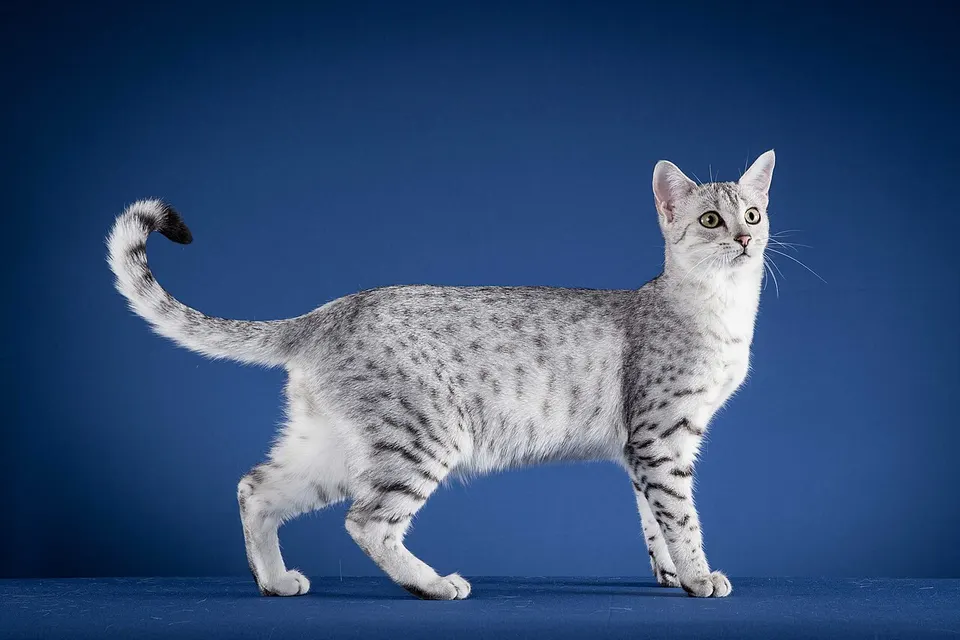
Egyptian Mau: Complete Breed Guide
Quick Facts
| Attribute | Details |
|---|---|
| Size | Medium (6-14 lbs) |
| Weight | Males: 10-14 lbs, Females: 6-10 lbs |
| Lifespan | 12-15 years |
| Temperament | Athletic, Loyal, Sensitive |
| Good with Kids | Good (with respectful children) |
| Good with Other Pets | Varies |
| Grooming Needs | Low |
| Vocalization | Moderate |
| Activity Level | Very High |
Recommended for Egyptian Maus
Basepaws DNA Test - Genetic health screening for cats | Spot Insurance - Coverage for heart conditions | Chewy - Interactive toys and climbing trees
Egyptian Mau Overview
The Egyptian Mau is a naturally spotted breed with roots tracing back to ancient Egypt, where spotted cats appear in papyrus paintings and tomb art. "Mau" is the Egyptian word for cat. This breed is one of the few naturally spotted domestic cats - their spots occur on both the coat and the skin underneath!
Egyptian Maus are the fastest domestic cat breed, capable of running over 30 mph thanks to their unique body structure, including a skin flap extending from flank to hind leg that allows for greater agility and longer strides. They come in silver, bronze, and smoke colors, all featuring their distinctive spotted pattern and striking gooseberry-green eyes.
The Egyptian Mau is a breed that exemplifies the remarkable diversity found within the domestic cat world. With a typical lifespan of 12-15 years, bringing a Egyptian Mau into your home represents a significant commitment—one that, when properly informed, leads to one of the most rewarding companion animal relationships possible. The Egyptian Mau's athletic, loyal, sensitive character is not simply a breed description but reflects deep-seated behavioral tendencies shaped by genetics, early socialization, and the breed's historical development. Understanding these underlying factors helps owners create environments and routines that bring out the best in their Egyptian Mau.
What many prospective Egyptian Mau owners discover quickly is that this breed has a distinctive personality that sets it apart from the generic notion of what a cat is like. The athletic, loyal, sensitive traits associated with Egyptian Mau manifest in daily life through specific play preferences, social interaction patterns, vocalization tendencies, and activity rhythms. Some Egyptian Mau are notably more interactive and demanding of attention than average, while others may display an independent streak that requires a different approach to bonding and enrichment. Understanding where your individual Egyptian Mau falls on this spectrum—and adjusting your care approach accordingly—is one of the keys to a harmonious human-cat relationship.
The indoor environment you create for your Egyptian Mau has a profound impact on their physical health and psychological wellbeing. Cats are environmental specialists, and the Egyptian Mau in particular benefits from a thoughtfully designed living space that includes vertical territory (cat trees, shelves, and elevated perches), horizontal hiding spots, scratching surfaces in various orientations, and interactive feeding opportunities that mimic natural foraging behavior. The quality and variety of environmental enrichment directly correlates with reduced behavioral problems, lower stress markers, and better overall health outcomes. Many veterinarians now consider environmental assessment a standard part of feline wellness examinations, recognizing that a cat's surroundings are as important to their health as their diet and medical care.
Temperament & Personality
Egyptian Maus have distinctive personalities:
- Fiercely Loyal: Form intense bonds with their chosen people.
- Sensitive: Can be shy or reserved with strangers.
- Athletic: Exceptional hunters and athletes who love to run and jump.
- Territorial: May be possessive of their family and space.
- Vocal: Known for chortle and other unique vocalizations.
- Water Fascinated: Many enjoy playing with or in water.
The athletic, loyal, sensitive temperament of the Egyptian Mau manifests in daily life through patterns of behavior that experienced owners learn to anticipate, appreciate, and manage. Unlike dogs, cats express their personality through more nuanced channels—the slow blink that signals trust, the tail position that communicates mood, the specific vocalizations reserved for different contexts and people. With Egyptian Mau, these communicative behaviors are often more pronounced and distinctive than in many other breeds, which is part of what makes the breed so engaging for owners who take the time to learn their individual cat's behavioral vocabulary.
The play drive in Egyptian Mau is not merely recreational—it serves essential functions for physical health, mental stimulation, and behavioral satisfaction. Interactive play sessions should be structured to mimic the predatory sequence that all cats are hardwired to perform: search, stalk, chase, pounce, and catch. Using wand toys, laser pointers (always ending with a tangible "catch"), and puzzle feeders that activate this sequence helps prevent the behavioral frustration that can lead to destructive behavior, nighttime hyperactivity, and inter-cat aggression in multi-cat households. Most Egyptian Mau benefit from at least two dedicated play sessions daily of 15-20 minutes each, ideally timed before meals to replicate the natural hunt-eat-groom-sleep cycle.
Understanding how Egyptian Mau respond to household changes, new people, and environmental disruptions is essential for maintaining their wellbeing. Cats are territorial animals, and Egyptian Mau in particular can be sensitive to disruptions in their environment and routine. Introducing new furniture, rearranging rooms, hosting visitors, or adding new family members (human or animal) should be managed thoughtfully with the cat's perspective in mind. Providing consistent safe spaces, maintaining feeding and play routines during transitions, and using pheromone products can significantly reduce stress-related behavioral changes. Owners who proactively manage their Egyptian Mau's environmental stability typically report fewer stress-related health issues and behavioral problems over the cat's lifetime.
Common Health Issues
Egyptian Maus are generally healthy but have some concerns:
Genetic Conditions
- Hypertrophic Cardiomyopathy (HCM): Heart disease that can occur in this breed.
- Leukodystrophy: A rare neurological condition reported in some lines.
- Pyruvate Kinase Deficiency: Can cause anemia; DNA testing available.
Other Health Concerns
- Sensitivity to Medications: Some may have reactions to certain anesthetics.
- Temperature Sensitivity: Prefer warm environments.
Health Screening Recommendation
Ask breeders about HCM screening and pyruvate kinase deficiency testing. Consider Basepaws DNA testing for comprehensive genetic health screening.
A proactive approach to Egyptian Mau's health management means understanding that prevention, early detection, and informed owner awareness are far more effective—and less expensive—than reactive treatment of advanced conditions. The Hypertrophic Cardiomyopathy (HCM), Leukodystrophy, Pyruvate Kinase Deficiency conditions noted above are not certainties but predispositions, and many can be mitigated or managed effectively when identified early. This requires a partnership with your veterinarian built on regular wellness examinations, age-appropriate screening tests, and open communication about subtle changes you observe at home. Keeping a brief health journal noting your Egyptian Mau's eating patterns, energy levels, bowel habits, and behavioral changes provides valuable information that can help your veterinarian identify trends before they become clinical problems.
Genetic testing has emerged as a powerful tool for Egyptian Mau owners who want to understand their individual animal's health risk profile. DNA testing services can identify carrier status for numerous breed-relevant conditions, allowing you to make informed decisions about screening schedules, dietary modifications, and insurance coverage. While a genetic predisposition does not guarantee that your Egyptian Mau will develop a particular condition, it does provide actionable information for targeted preventive care. For example, knowing that your Egyptian Mau carries markers associated with joint conditions can guide decisions about exercise intensity, weight management, and joint supplementation from an early age—interventions that may significantly delay or reduce the severity of clinical disease.
Age-related health changes in Egyptian Mau follow predictable patterns that informed owners can anticipate and prepare for. The transition from young adult to middle age (typically around the midpoint of the 12-15 years expected lifespan) often brings the first signs of conditions that will require ongoing management. This is the appropriate time to discuss enhanced screening protocols with your veterinarian, consider adjustments to diet and exercise routines, and evaluate whether your current insurance coverage adequately addresses the conditions most likely to emerge during the senior years. Egyptian Mau that receive consistently excellent preventive care throughout their lives have demonstrably better health outcomes and quality of life in their senior years compared to those whose care becomes reactive only after problems are diagnosed.
Cost of Ownership
Understanding the full cost helps prepare for Egyptian Mau ownership:
| Expense Category | Annual Cost Estimate |
|---|---|
| Food (premium quality) | $350-$550 |
| Veterinary Care (routine) | $200-$400 |
| Pet Insurance | $250-$500 |
| Grooming (supplies) | $30-$60 |
| Litter & Supplies | $200-$400 |
| Toys & Enrichment | $150-$300 |
| Total Annual Cost | $1,180-$2,210 |
Initial Costs: Egyptian Mau kittens from reputable breeders typically cost $1,200-$2,500. This is a relatively rare breed.
Save on Egyptian Mau Care
Chewy Autoship - Save up to 35% on food & supplies | Lemonade Pet - Affordable cat insurance from $12/month | Feliway - Stress reduction for sensitive cats
Understanding the complete financial picture of Egyptian Mau ownership goes beyond the annual cost table above. The figures represent averages, and your actual costs will vary based on your geographic location, the specific health needs of your individual Egyptian Mau, and the level of care you choose to provide. Urban areas typically carry higher veterinary and grooming costs, while rural areas may have fewer specialized providers, requiring travel for certain services. Building a comprehensive budget that accounts for both predictable recurring costs and an emergency fund for unexpected expenses is one of the most responsible things you can do as a prospective Egyptian Mau owner.
The first year of Egyptian Mau ownership typically carries the highest costs due to one-time expenses including initial veterinary examinations, vaccination series, spay/neuter surgery (if applicable), basic training, and the purchase of essential supplies. After the first year, annual costs typically stabilize at a lower baseline, but owners should anticipate gradual increases as the animal ages. Senior Egyptian Mau often require more frequent veterinary visits, specialized diets, joint supplements, and management of chronic conditions that emerge during the later portion of their 12-15 years lifespan. Planning for these escalating costs from the beginning prevents financial surprises that could compromise care quality during the years when your Egyptian Mau needs it most.
The economic value of preventive care investment deserves emphasis because it is consistently the most cost-effective approach to Egyptian Mau health management. Regular wellness examinations, timely vaccinations, dental care, parasite prevention, and quality nutrition cost less—often dramatically less—than treating the preventable conditions that arise when these measures are skipped. Data from veterinary insurance companies consistently shows that pet owners who invest in regular preventive care spend 30-50% less on veterinary care over their pet's lifetime compared to those who seek veterinary attention only when problems become obvious. For Egyptian Mau specifically, this preventive approach also tends to produce better health outcomes and a higher quality of life throughout the 12-15 years expected lifespan.
Care Requirements
Egyptian Maus need specific care considerations:
- Active Play: Multiple vigorous play sessions daily to burn their abundant energy.
- Vertical Space: Very tall cat trees and shelves for climbing.
- Running Space: Room to run at full speed; consider a cat wheel.
- Warm Environment: They prefer warm temperatures.
- Slow Introductions: Take time with new people and pets.
- Indoor Living: Best kept indoors with supervised outdoor time.
Grooming Needs
Egyptian Maus have minimal grooming requirements:
- Brushing: Weekly brushing to remove loose hair.
- Coat Type: Medium-length, silky coat with natural sheen.
- Shedding: Moderate shedding year-round.
- Bathing: Rarely needed unless they get into something messy.
- Nail Trimming: Every 2-3 weeks.
- Dental Care: Regular brushing recommended.
Nutrition & Feeding
Proper nutrition supports Egyptian Mau health:
- High-Quality Protein: Their athletic nature requires excellent protein sources.
- Active Cat Needs: May need more calories due to high activity level.
- Lean Muscle Support: Foods that support lean muscle mass.
- Measured Meals: Two to three meals daily.
- Fresh Water: Multiple sources; many enjoy playing with water.
Top Food Choices for Egyptian Maus
Smalls Cat Food - Human-grade fresh cat food | Orijen - High-protein formulas for active cats | Chewy - Premium cat food selection
Nutrition for Egyptian Mau is a foundational aspect of health management that affects virtually every body system—from coat or feather quality and energy levels to immune function, digestive health, and longevity. The quality of nutrition you provide during each life stage has compounding effects over your Egyptian Mau's lifetime, making dietary decisions one of the highest-impact areas where owners can directly influence long-term health outcomes. While the basics of Egyptian Mau nutrition are well-established, individual variation means that the optimal diet for your specific animal may require some experimentation and adjustment based on their unique metabolism, activity level, and health status.
Reading and understanding pet food labels is a skill that directly benefits your Egyptian Mau's health. The ingredients list, guaranteed analysis, and feeding guidelines on commercial foods provide important but incomplete information. Learning to evaluate protein quality (whole meat sources versus by-product meals), identify unnecessary fillers and artificial additives, and understand the difference between minimum guaranteed values and actual nutritional content empowers you to make informed food choices. For Egyptian Mau specifically, attention to caloric density relative to the animal's size and activity level helps prevent both undernutrition and the obesity that is increasingly recognized as a serious health concern across all companion animal species.
Is an Egyptian Mau Right for You?
Egyptian Maus Are Great For:
- Active individuals who can provide vigorous exercise
- Those who want a loyal, devoted companion
- People fascinated by exotic-looking cats
- Experienced cat owners who understand sensitive breeds
- Homes with respectful older children
Egyptian Maus May Not Be Ideal For:
- Busy households with frequent visitors
- Families with very young children
- Those seeking an immediately social, outgoing cat
- Multi-cat households where they can't be the primary cat
- People who want a low-energy lap cat
Making an informed decision about whether Egyptian Mau is the right cat for your household requires honest self-assessment about your lifestyle, living situation, experience level, and long-term plans. The lists above provide a starting framework, but the reality is more nuanced than any compatibility checklist can capture. The most important factor in successful Egyptian Mau ownership is not whether you match a particular profile, but whether you are genuinely prepared to adapt your lifestyle to meet this breed's specific needs consistently over their 12-15 years lifespan. Many wonderful Egyptian Mau owners do not perfectly match the "ideal owner" profile—what they share is a commitment to learning and adapting.
If you are seriously considering a Egyptian Mau, invest time in firsthand research before making a commitment. Visit with Egyptian Mau owners if possible, attend breed-specific events or meetups, and consult with breeders or rescue organizations who can provide candid assessments of the breed's day-to-day reality. Online research is valuable but cannot fully convey what living with a Egyptian Mau is actually like—the energy level, the noise, the grooming demands, the emotional bond, and the daily routine adjustments are all things best understood through direct experience or detailed conversation with current owners.
For those who do proceed with Egyptian Mau ownership, the experience is overwhelmingly positive when expectations are properly calibrated and preparation is thorough. The athletic, loyal, sensitive personality that makes Egyptian Mau special is best appreciated by owners who understand the breed's needs and are willing to provide the indoor enrichment, play sessions, and litter maintenance that keeps these cats healthy, happy, and well-adjusted. The investment of time, energy, and resources pays returns in the form of a companionship experience that is uniquely rewarding—one that Egyptian Mau owners consistently describe as one of the most fulfilling aspects of their daily lives.
Related Breeds to Consider
If you're interested in Egyptian Maus, you might also consider:
- Ocicat - Similar spotted appearance, more social
- Abyssinian - Athletic and active, similar sensitivity
- Bengal - Spotted/marbled coat, high energy
- Savannah - Wild appearance, athletic
Ask Our AI About Egyptian Maus
Have specific questions about Egyptian Mau health, behavior, or care? Our AI assistant can provide personalized guidance.
Related Health & Care Guides
Get Personalized AI Guidance
Have specific questions about your pet? Our AI assistant provides expert-level, personalized advice based on your pet's unique needs and situation.
Ask Our AI Now