Cheetoh
Quick Facts
| Attribute | Details |
|---|---|
| Size | Large (12-25 lbs) |
| Height | 12-14 inches |
| Lifespan | 12-14 years |
| Temperament | Social, Gentle, Playful |
| Shedding | Moderate |
| Activity Level | High |
| Vocalization | Moderate |
| Good with Kids | Excellent |
| Good with Other Pets | Good |
| Grooming Needs | Low |
| Intelligence | High |
| Origin | United States |
| Beginner-Friendly | 3/5 |
Recommended Products
Chewy - Cat food & supplies | Basepaws - Cat DNA testing | Spot Insurance - Cat health coverage
Cheetoh Overview
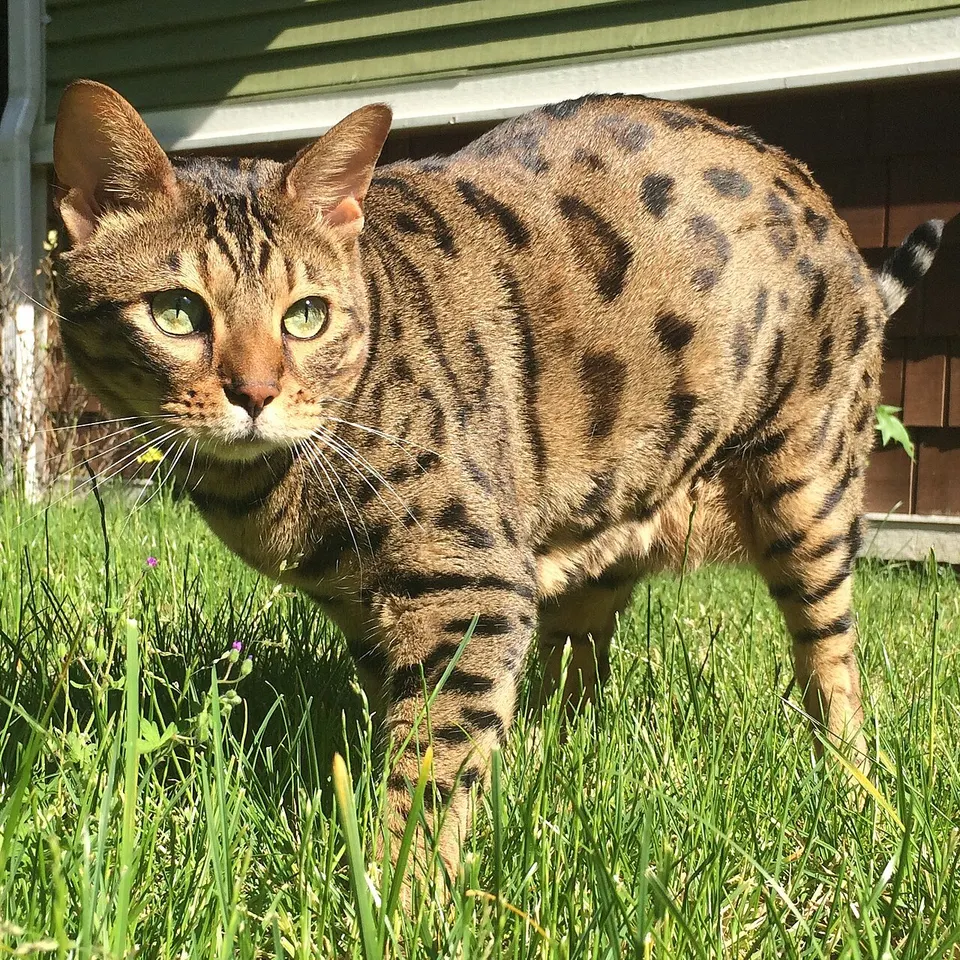
The Cheetoh cat is a striking hybrid breed created by crossing Bengal cats with Ocicat bloodlines, resulting in a large, muscular cat with a wild, cheetah-like appearance but a thoroughly domestic temperament. Developed by Carol Drymon in 2001, the Cheetoh was specifically bred to combine the exotic spotted coat pattern of wild-looking breeds with an exceptionally gentle and sociable personality. These cats are remarkably larger than most domestic breeds, with males sometimes reaching 25 pounds of lean muscle. Their coat features bold spots or rosettes on a warm golden, silver, or brown background, creating an unmistakable wild appearance. Despite their impressive size and exotic looks, Cheetohs are known for being extraordinarily gentle, social, and affectionate - they love being around people and are often described as having dog-like personalities.
With a typical lifespan of 12-14 years, bringing a Cheetoh into your home represents a significant commitment—one that, when properly informed, leads to one of the most rewarding companion animal relationships possible. The Cheetoh's social, gentle, playful character is not simply a breed description but reflects deep-seated behavioral tendencies shaped by genetics, early socialization, and the breed's historical development. Understanding these underlying factors helps owners create environments and routines that bring out the best in their Cheetoh.
What many prospective Cheetoh owners discover quickly is that this breed has a distinctive personality that sets it apart from the generic notion of what a cat is like. The social, gentle, playful traits associated with Cheetoh manifest in daily life through specific play preferences, social interaction patterns, vocalization tendencies, and activity rhythms. Some Cheetoh are notably more interactive and demanding of attention than average, while others may display an independent streak that requires a different approach to bonding and enrichment. Understanding where your individual Cheetoh falls on this spectrum—and adjusting your care approach accordingly—is one of the keys to a harmonious human-cat relationship.
The indoor environment you create for your Cheetoh has a profound impact on their physical health and psychological wellbeing. Cats are environmental specialists, and the Cheetoh in particular benefits from a thoughtfully designed living space that includes vertical territory (cat trees, shelves, and elevated perches), horizontal hiding spots, scratching surfaces in various orientations, and interactive feeding opportunities that mimic natural foraging behavior.
Personality & Temperament
The Cheetoh is characterized by its social, gentle, playful nature. They require regular active play sessions to stay healthy and happy.
When it comes to family life, Cheetohs are outstanding with children, making them ideal family cats. They can coexist well with other pets when properly introduced.
The social, gentle, playful temperament of the Cheetoh manifests in daily life through patterns of behavior that experienced owners learn to anticipate, appreciate, and manage. With Cheetoh, these communicative behaviors are often more pronounced and distinctive than in many other breeds, which is part of what makes the breed so engaging for owners who take the time to learn their individual cat's behavioral vocabulary.
The play drive in Cheetoh is not merely recreational—it serves essential functions for physical health, mental stimulation, and behavioral satisfaction. Most Cheetoh benefit from at least two dedicated play sessions daily of 15-20 minutes each, ideally timed before meals to replicate the natural hunt-eat-groom-sleep cycle.
Understanding how Cheetoh respond to household changes, new people, and environmental disruptions is essential for maintaining their wellbeing. Cats are territorial animals, and Cheetoh in particular can be sensitive to disruptions in their environment and routine. Owners who proactively manage their Cheetoh's environmental stability typically report fewer stress-related health issues and behavioral problems over the cat's lifetime.
Common Health Issues
While Cheetohs can be healthy cats, they may be prone to certain conditions.
- Hypertrophic Cardiomyopathy (HCM): A condition that breeders should screen for and owners should monitor.
- Progressive Retinal Atrophy: A condition that breeders should screen for and owners should monitor.
- Patellar Luxation: A condition that breeders should screen for and owners should monitor.
- Dental Issues: A condition that breeders should screen for and owners should monitor.
Health Screening Recommendation
Ask breeders about health testing for breed-specific conditions. Consider Basepaws DNA testing for comprehensive genetic screening.
Good health outcomes for a Cheetoh depend less on reacting to problems and more on preventing them from gaining a foothold.
DNA-based health screening has become increasingly accessible for Cheetoh owners who want a clearer picture of what their individual animal may face down the road.
As your Cheetoh moves through the middle stage of life, proactive adjustments make a measurable difference. The goal is not to slow aging itself, but to ensure that each stage is met with care that actually matches where your Cheetoh is, not where they were two years ago.
Diet & Nutrition
High-protein, grain-free diet formulated for large, active cats. Feed 1/2-3/4 cup of quality dry food or equivalent wet food daily. Their large size requires adequate caloric intake.
Feeding a Cheetoh well is less about following trends and more about paying attention to your specific animal. Some Cheetohs do great on standard kibble; others need a different approach due to allergies, sensitivities, or individual metabolism. Work with your vet to find what works, and be willing to adjust as your Cheetoh's needs change with age.
A five-minute vet conversation is how generic Cheetoh guidance becomes a plan fitted to your specific animal.
Housing & Environment
Needs spacious living environment with climbing structures. Tall cat trees and wall shelves essential. They are active and need room to play and explore.
Grooming Requirements
Minimal grooming - weekly brushing to remove loose fur. Short coat is nearly self-maintaining. Regular nail trims every 2-3 weeks.
Activity & Exercise
30+ minutes of active interactive play daily. They enjoy fetch, puzzle toys, and chasing games. Consider harness training for outdoor adventures.
Cost of Ownership
| Expense | Annual Estimate |
|---|---|
| Food (premium) | $300-$600 |
| Veterinary Care | $200-$400 |
| Insurance | $250-$500 |
| Toys & Enrichment | $100-$250 |
| Litter & Supplies | $200-$400 |
| Total Annual | $1500-$2800 |
Budget estimates only tell part of the story. Some Cheetoh owners spend well below these figures; others spend significantly more due to health issues or premium product choices.
Expect the first year of Cheetoh ownership to carry the heaviest financial load.
Regular health assessments for your Cheetoh are an investment, not an expense.
Insurance Considerations
HCM screening coverage important. Budget $25-45/month for cat insurance.
Socialization & Enrichment
Early socialization is vital for Cheetoh kittens. Between 2-7 weeks of age, kittens are most receptive to new experiences.
Environmental enrichment keeps your Cheetoh mentally stimulated and physically active. Consider clicker training - many Cheetohs respond well to positive reinforcement training and can learn tricks and commands.
Where to Find a Cheetoh
When searching for a Cheetoh, seek out reputable breeders who health-test their breeding cats, raise kittens in a home environment, provide health guarantees, and are active in the cat fancy community.
Breed-specific rescue organizations are another excellent option. Many wonderful Cheetohs and Cheetoh mixes are available for adoption.
Daily Life with a Cheetoh
Living with a Cheetoh is an uniquely rewarding experience. Morning and evening feeding times create structure, while scheduled play sessions provide the physical and mental stimulation that Cheetohs need.
Given their high energy levels, Cheetohs do best in homes that provide plenty of interactive play opportunities, climbing structures, and enrichment activities throughout the day. Regular veterinary check-ups, dental care, and weight monitoring are essential parts of responsible Cheetoh ownership that contribute to a long, healthy life together.
Common Questions About Cheetohs
If you are optimizing a Cheetoh's routine, this is one of the higher-leverage items to get right early.
Are Cheetohs good with children?
Yes, Cheetohs are excellent with children. Their social, gentle, playful nature makes them patient and gentle companions for families with kids. They enjoy interactive play and are typically tolerant of the bustle of family life. Always supervise young children with any cat and teach respectful handling.
How much grooming does a Cheetoh need?
What health problems are common in Cheetohs?
The most common health concerns include Hypertrophic Cardiomyopathy (HCM), Progressive Retinal Atrophy, Patellar Luxation. Pet insurance can help manage unexpected veterinary costs.
How long do Cheetohs live?
Cheetohs typically live 12-14 years. Indoor-only cats generally live significantly longer than those with outdoor access.
Is a Cheetoh Right for You?
Knowing how this works in a Cheetoh context removes a lot of the guesswork from day-to-day decisions. Count on a short adjustment period, a Cheetoh tends to signal clearly when something fits and when it does not.
Cheetoh May Be Great For:
- Keepers with appropriate experience and dedication
- Those who can commit to long-term care requirements
- Enthusiasts interested in this breed's unique characteristics
Cheetoh May Not Be Ideal For:
- Those seeking a very low-maintenance pet
- Those with limited space or budget for proper setup
A Cheetoh can be a wonderful companion for the right person.
Life with a Cheetoh settles into a rhythm that most owners come to genuinely enjoy.
Related Breeds to Consider
Decision Guides for Cheetoh
Use these only when comparing food, insurance, ownership budget, or beginner fit for this specific pet.